151 पटक हेरिएको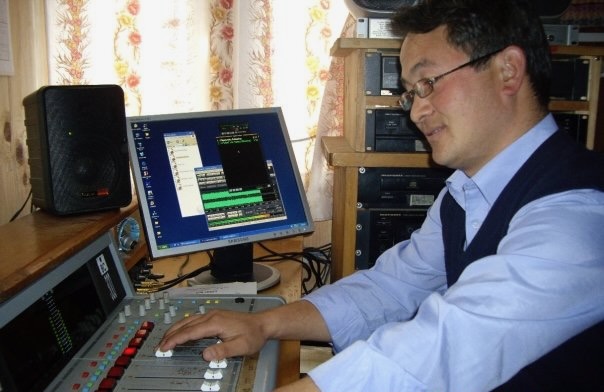
Kathmandu: Public Service Announcements related to Citywide Inclusive Sanitation (CWIS) have been produced. These PSAs were developed with the objective of broadcasting them through radio stations in various districts in order to promote the concept of citywide inclusive sanitation.
The public interest messages were produced under the “Scalling of Citywide Inclusive Sanitation Service System” and are designed to promote key issues related to citywide inclusive sanitation.
The messages were developed after analyzing the current sanitation situation in the program-implemented districts, and the content was determined accordingly. At present, five public interest messages have been produced. The following issues are covered in the Radio PSA :
1. Let Us Manage Human Excreta by Transporting It to Treatment Centers
In Mechinagar Municipality of Jhapa, two fecal sludge management treatment plants have been constructed specifically for managing human excreta. However, these facilities are only partially operational. Due to private tanker operators discharging fecal sludge in open areas, the treatment plants are not operating at full capacity, causing serious impacts on public health and the environment.
In such a situation, stopping open dumping and ensuring that human excreta is transported to treatment centers for proper management is a responsibility shared by all.
The first public interest message portrays the existing situation and encourages the general public to manage human excreta by taking it to designated treatment centers.
Listen to this PSA.
2. Risks Faced by Sanitation Workers and Necessary Safety Measures
In areas without sewerage systems, both formal and informal sanitation workers are engaged in emptying septic tanks once they fill up. Sanitation workers working in institutional as well as private sectors often do not use personal protective equipment (PPE).
Although they are aware that safety measures should be adopted at the workplace, the lack of provision by employers forces them to work in the field without protective gear. In such circumstances, sanitation workers must be encouraged to mandatorily use personal safety equipment.
When sanitation workers become aware of occupational safety measures, they tend to either arrange safety equipment themselves or demand it from their employers.
Therefore, this message has been prepared to raise awareness about the risks faced by sanitation workers and the safety measures they should adopt.
Listen to this PSA.
3. Disposing Human Excreta into Rivers and Streams Is Punishable
In Kathmandu Valley, septic tanks of houses not connected to sewerage systems are being emptied by private tanker operators, who often dispose of the waste along the banks of the Bagmati River or other rivers.
For such illegal disposal, Kathmandu Metropolitan City and Lalitpur Metropolitan City periodically take action against the operators and impose fines.
Recently, a wastewater treatment plant constructed in Dhobighat includes a compartment specifically designed for treating fecal sludge. However, many tanker operators remain unaware of this facility, which is why open dumping into rivers continues.
Considering this situation, this public interest message was produced to ensure that fecal sludge is disposed of only at the Dhobighat treatment plant. The primary objective of producing and broadcasting this message is to inform that dumping human excreta into rivers such as the Bagmati is punishable, and that disposal must be carried out only at the designated treatment facility in Dhobighat.
Listen to this PSA.
4. What Should a Standard Septic Tank Be Like?
The sanitation situation in Gorkha District, where the “Scalling of Citywide Inclusive Sanitation Service System” is being implemented, is quite poor. Older houses have unsafe septic tanks, and even newly constructed buildings lack any standard or guideline for septic tank construction.
There is a common misconception that a septic tank is merely a pit for collecting human excreta. In this context, this PSA was produced to convey the message that only standard septic tanks should be constructed.
Through this PSA, messages emphasizing the protection of drinking water sources and safe sanitation are delivered, encouraging the construction of standard septic tanks while building houses.
Listen to this PSA.
5. The Concept of Citywide Inclusive Sanitation
The sanitation situation varies across districts where the “Scalling of Citywide Inclusive Sanitation Service System” is being implemented. In Godawari Municipality of Kailali, for instance, an Integrated Solid Waste Management Center has been established.
This facility has been constructed through joint investment by the Asian Development Bank, the Ministry of Urban Development, the Department of Urban Development and Building Construction, and Godawari Municipality, and has only recently come into operation.
Considering the need to inform local residents and the municipality about the conceptual aspects of citywide inclusive sanitation, relevant content was developed.
This PSA emphasizes that having toilets alone is not sufficient; rather, people from all social and economic groups must have equal access to safe collection, transportation, treatment, and reuse of human excreta.
Listen to this PSA.