330 पटक हेरिएको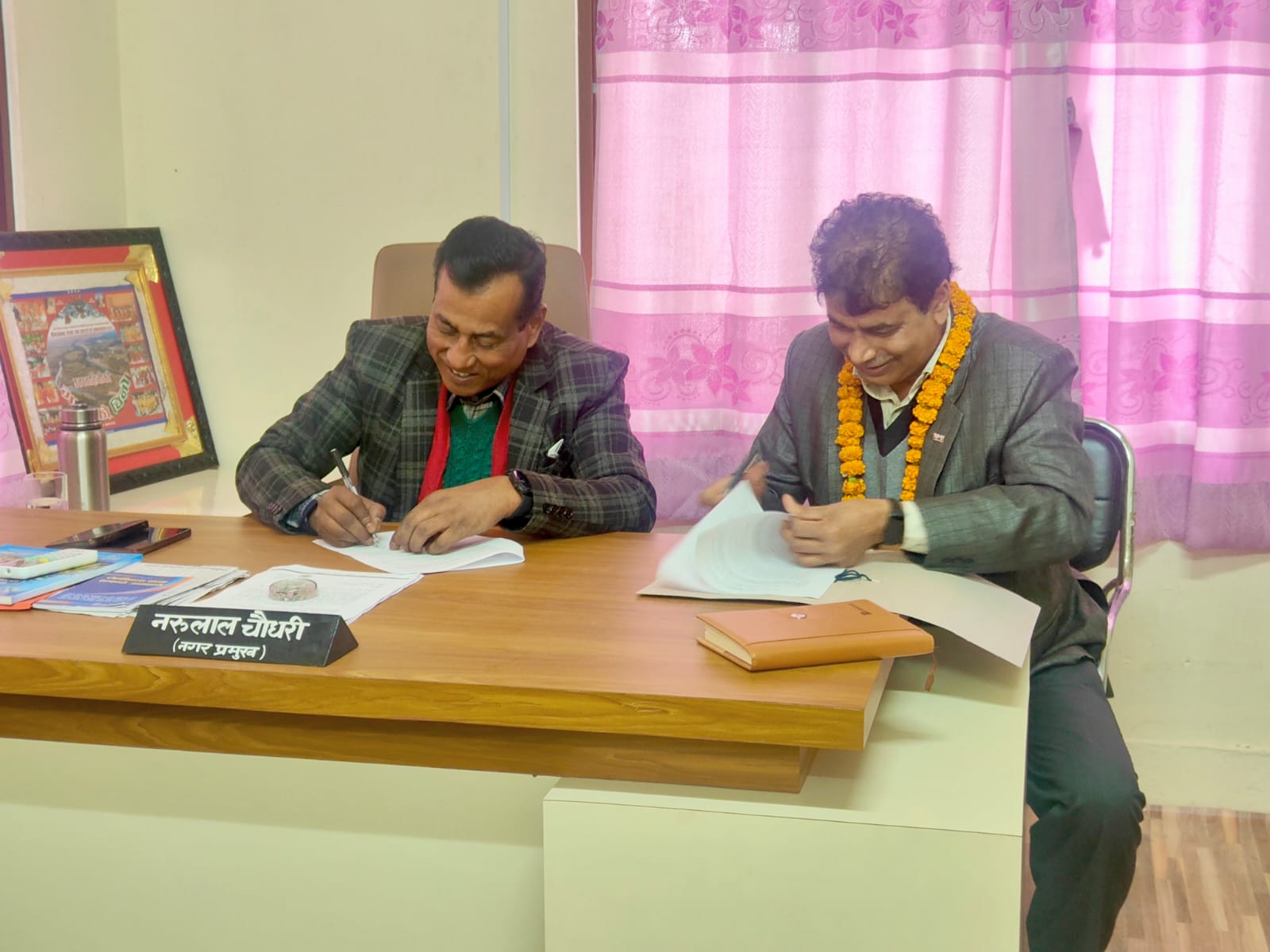
Ghorahi: An agreement has been signed between the Water Supply and Sewerage Management Office (WSSMO), Nepalgunj, and Ghorahi Sub-Metropolitan City to ensure the regular operation and maintenance of the Fecal Sludge Management (FSM) project being implemented in Ghorahi.
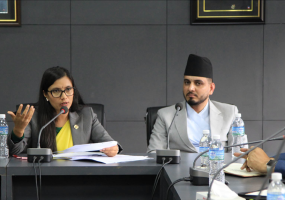
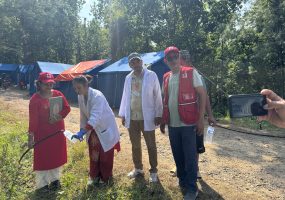
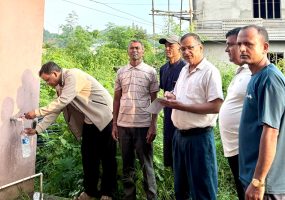
The agreement was facilitated during a monitoring visit of the Scaling of Citywide Inclusive Sanitation Service System (Nepal) programme by a UN-Habitat team. The understanding focuses on the operation, maintenance, and overall management of the fecal sludge treatment facility in Ghorahi.
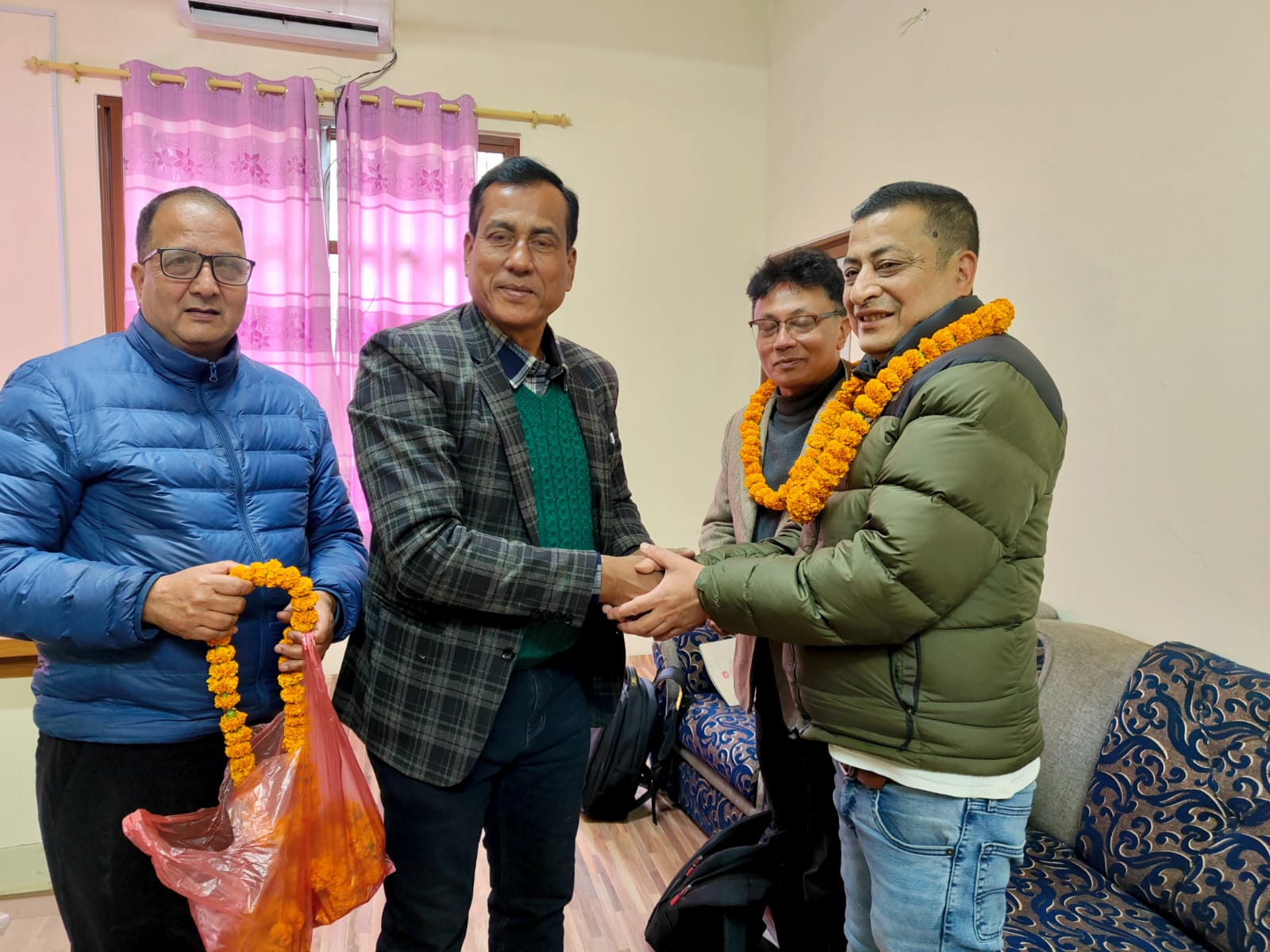
The monitoring team included Technical Officer Rajesh Manandhar and Co-Coordinator Bhintuna Shrestha from the Scaling of Citywide Inclusive Sanitation Service System (Nepal) programme, along with Govinda Shrestha, Senior Policy and Advocacy Officer at WaterAid Nepal, among others.
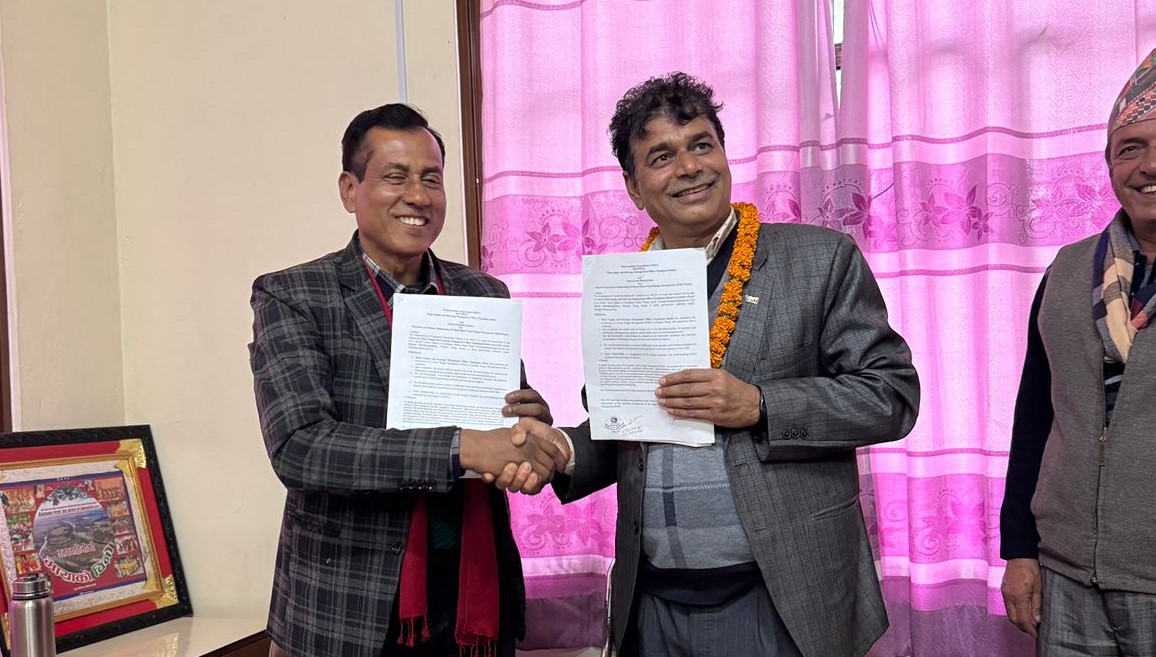
The Memorandum of Understanding (MoU) was signed by Engineer Devendra Kumar Jha, Chief of the Water Supply and Sewerage Management Office, Nepalgunj, and Narulal Chaudhary, Mayor of Ghorahi Sub-Metropolitan City.
According to the agreement, upon completion of the construction works, Ghorahi Sub-Metropolitan City will assume full ownership, operation, and maintenance responsibility of the FSM facility. The Water Supply and Sewerage Management Office, as a federal entity, will continue to provide technical, managerial, and capacity development support.
The agreement highlights that rapidly growing cities like Ghorahi are facing increasing environmental and public health risks due to population growth, unplanned urbanization, and weak waste management systems. Currently, untreated domestic and industrial wastewater and fecal sludge are often disposed of in open areas or private land, leading to pollution of water sources and the surrounding environment.
To address these challenges, the FSM project initiated in Ghorahi aims to promote safely managed sanitation services, environmental protection, and improved public health. The total estimated cost of the project is NPR 61,494,484.74.
Roles of the Sewerage Management Office and the Sub-Metropolitan City
Under the agreement, the Water Supply and Sewerage Management Office, Nepalgunj, will provide the required capital investment for construction of the project and support technical and managerial assistance during the initial operation phase. The office will also support monitoring and evaluation, compliance with environmental standards, public awareness activities, and the development of a licensing system for the safe sanitation service chain, including emptying, transportation, treatment, and safe disposal or reuse.
Similarly, Ghorahi Sub-Metropolitan City has committed to providing the required land for the FSM facility, taking ownership after construction, allocating annual budget for operation and maintenance, and establishing a dedicated sanitation unit or committee. The sub-metropolitan city will mobilize skilled human resources, manage two operation and maintenance staff and one caretaker, procure desludging vehicles for septic tank emptying, and ensure the provision of personal protective equipment.
To ensure the sustainable operation of the project, a Joint Coordination Committee will be formed to oversee implementation, monitor performance, and address operational challenges. The committee will meet at least on a quarterly basis.
The agreement also includes provisions for developing operational guidelines, conducting regular flow measurements, monitoring the performance of treatment ponds, and covering operational costs through internal revenue by linking sewerage service fees with water tariffs.
Both parties have expressed a shared commitment to expanding safe, inclusive, and environmentally friendly sanitation services in Ghorahi Sub-Metropolitan City. It is clarified that the MoU does not constitute a legal transfer of ownership but serves as a foundation for long-term cooperation and partnership.
Once operational, the FSM project is expected to make a significant contribution to the safe management of fecal sludge, protection of rivers and water sources, and improvement of public health in Ghorahi.