587 पटक हेरिएको
 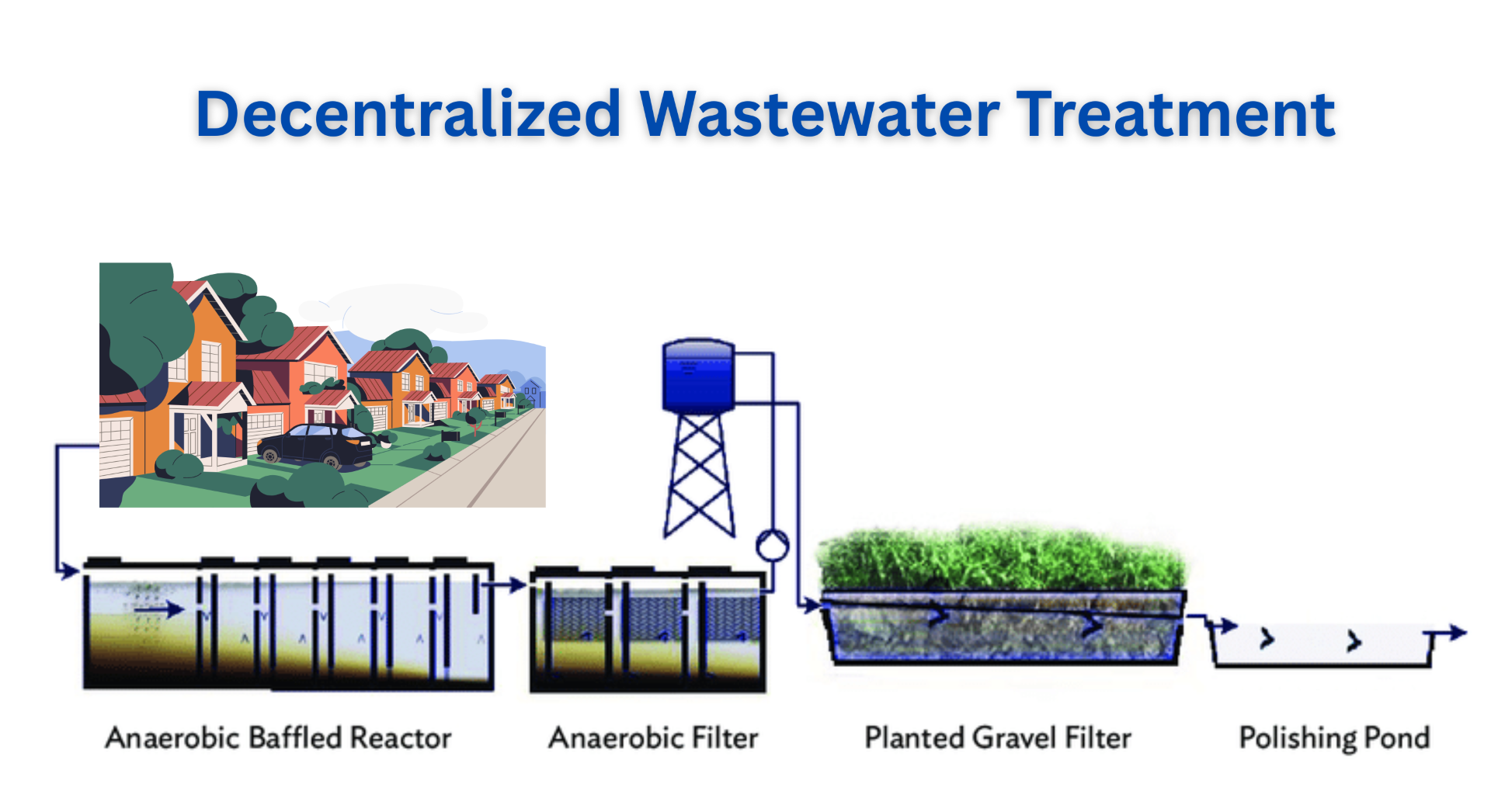 Kathmandu: Managing wastewater safely in cities and settlements has become one of today’s major challenges. At a time when centralized sewerage systems are becoming increasingly expensive, complex, and costly to operate in the long run, the Decentralized Wastewater Treatment System (DEWATS) is being adopted worldwide as a practical and effective alternative.
DEWATS is a wastewater treatment system installed at a small to medium scale near the place where wastewater is generated. Wastewater produced from houses, neighborhoods, settlements, schools, hospitals, market areas, or institutional premises is collected and treated nearby in an environmentally friendly manner.
DEWATS in the Context of Nepal
In many cities and settlements of Nepal, sewerage systems are limited. Even where wastewater treatment plants exist, they have not been able to operate at full capacity. In such a situation, DEWATS can become a practical, affordable, and sustainable solution for local governments and communities, says sanitation engineer Bimal Tandukar.
He further states that the use of DEWATS, especially in Water, Sanitation, and Hygiene (WASH) sector projects, can make a long-term contribution to safe sanitation, environmental protection, and water resource management.
Why is DEWATS a Suitable Alternative?
Decentralized Wastewater Treatment Systems (DEWATS) are now being seen as practical and sustainable alternatives because of their multidimensional benefits. Compared to centralized sewerage systems, DEWATS addresses local needs, economic feasibility, and environmental balance at the same time, according to Tandukar.
1. Cost-effective Solution
Centralized sewerage systems require long pipelines, pumping stations, and large treatment plants, which makes both the initial investment and operational costs very high. Since DEWATS is installed close to where wastewater is generated, infrastructure costs are significantly lower. Operation and maintenance costs are also minimal, making it an economically viable option for local governments and communities.
2. Easy to Operate
DEWATS mainly relies on natural gradients and biological processes, so in most cases it does not require electricity. With minimal need for pumping, machinery, and complex equipment, energy consumption is reduced, making long-term operation easier and more sustainable.
3. Environment-friendly Technology
Because wastewater is treated through natural bacteria and biological processes, DEWATS is an environmentally friendly system. It reduces the use of chemicals and carbon emissions. As a result, negative impacts on soil, water, and the surrounding ecosystem are minimized.
4. Locally Managed System
Another important aspect of DEWATS is local ownership and management. Since communities, schools, institutions, or local governments can operate and maintain the system themselves, dependence on external technical support is reduced. This not only builds local capacity but also ensures long-term sustainability.
5. Possibility of Water Reuse
Treated water from DEWATS can be reused for garden irrigation, greening activities, or the management of open spaces. This reduces pressure on drinking water sources and increases overall water use efficiency.
6. Contribution to Water Resource Protection
When untreated wastewater is directly discharged into rivers, streams, or the ground, it pollutes water sources. Since DEWATS treats wastewater safely before discharge, it plays a significant role in reducing river and stream pollution. This has positive impacts on both public health and environmental protection.
Wastewater management infrastructure is not only about construction it is also directly linked to public health, the environment, and sustainable development. According to sanitation engineer Tandukar, DEWATS can provide solutions to sanitation problems in countries like Nepal based on local needs. He says, “With proper planning, technical support, and community participation, DEWATS can become a strong foundation for building safe and clean settlements.”