599 पटक हेरिएको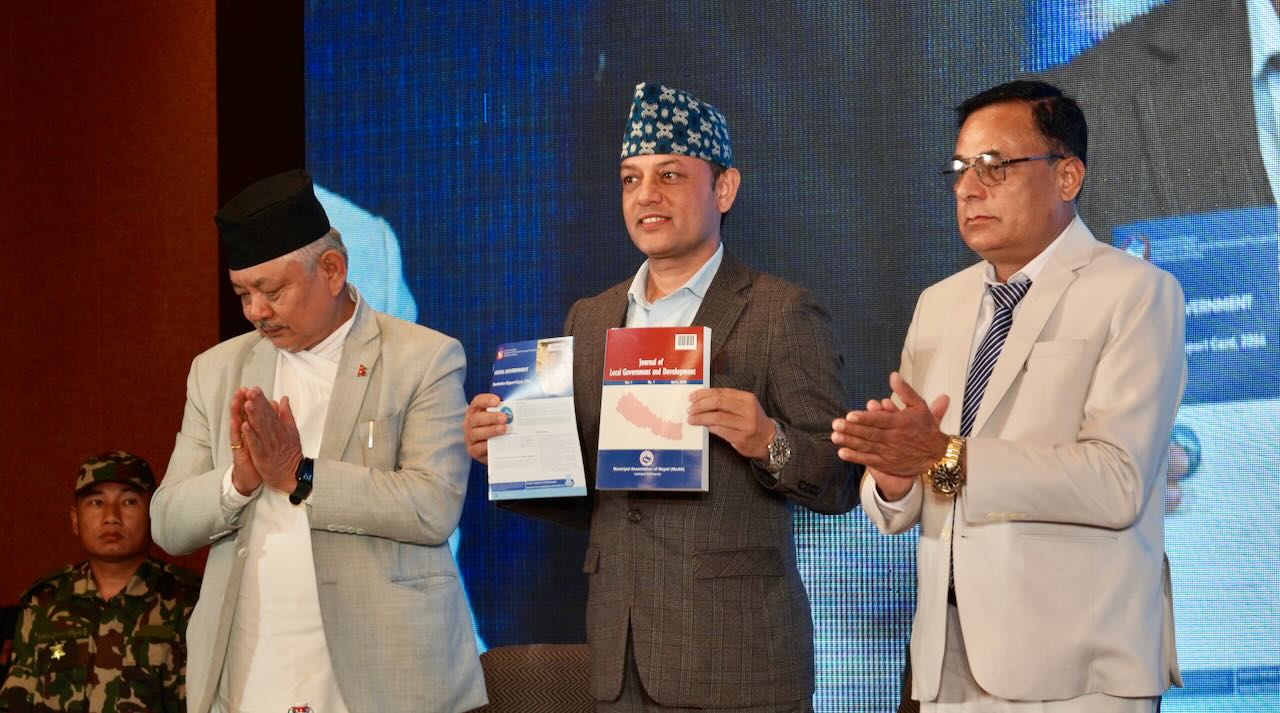
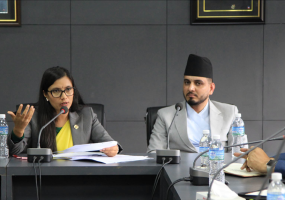
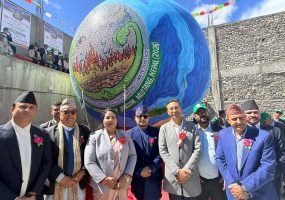
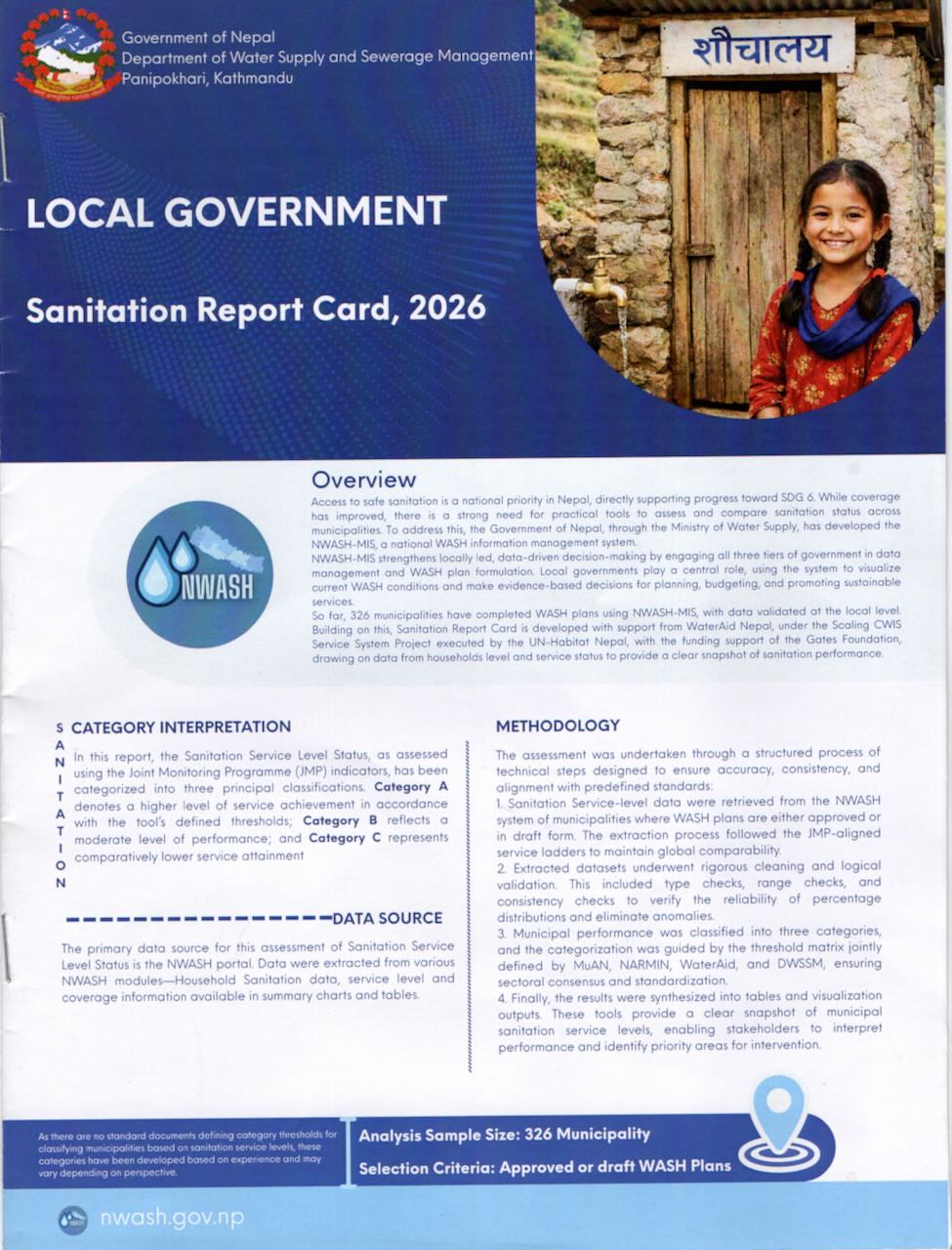
Kathmandu: The Department of Water Supply and Sewerage Management (DWSSM) has officially launched the NWASH-based Local Government Sanitation Report Card, 2026. The report card was unveiled by Speaker of the House of Representatives Dol Prasad Aryal on the occasion of the 33rd anniversary of the Municipal Association of Nepal (MuAN).
According to the Department, the sanitation report presents a clear picture of the sanitation service status of local governments across the country.
As per the report, 45.17 percent of the population has access to safely managed sanitation services. Likewise, 21.94 percent of the population has access to basic sanitation services, 1.92 percent to limited services, 13.72 percent to unimproved services, while 17.25 percent of the population still remains without access to toilets.
The report, prepared based on data obtained from the NWASH-MIS (National WASH Information Management System) developed under the Ministry of Water Supply, provides an evidence-based foundation for local-level planning, budgeting, and service improvement, said Dr. Rajit Ojha, Senior Divisional Engineer at DWSSM.
87 Local Governments in Category ‘A’
The report has classified sanitation service levels into three categories: A, B, and C.
Category A includes local governments where safely managed sanitation services exceed 80 percent, or basic sanitation coverage is above 95 percent.
A total of 87 local governments fall under this category.
Category B includes the highest number of local governments, with 147 local levels, where safely managed services range between 30 to 80 percent, or basic sanitation coverage lies between 80 to 95 percent.
Meanwhile, 92 local governments have been placed in Category C, where safely managed sanitation services are 30 percent or below. This indicates that significant disparities in sanitation services still persist among local governments.
According to DWSSM, this classification has been carried out based on a threshold matrix jointly determined by MuAN, NARMIN, WaterAid, and DWSSM.
Data from WASH Plans of 326 Local Governments Analyzed in Four Stages
For the preparation of the report, data was collected from approved or draft WASH plans of 326 local governments. According to Senior Divisional Engineer Dr. Rajit Ojha, the data was extracted from the household sanitation, service level, and coverage modules of the NWASH portal.
Dr. Ojha stated that the analysis process was completed in four stages:
• Data collection from the NWASH system
• Data cleaning and logical validation
• Performance classification
• Preparation of tables and visual report outputs
It has been stated that this process ensured the reliability of percentage distribution, global comparability with JMP standards, and standardized comparison among local governments.

Useful for Measuring SDG 6 Progress and Budget Prioritization
DWSSM has taken the report card as an important tool for measuring progress toward SDG 6, prioritizing local government budgets, and strengthening CWIS-based safely managed sanitation systems.
Developed with the support of WaterAid Nepal, the report was prepared under the “Scaling of Citywide Inclusive Sanitation Service System Programme”, implemented by UN-Habitat Nepal.
According to the Department, the report is expected to strengthen the identification of underperforming municipalities, the formulation of service improvement strategies, and evidence-based decision-making processes.