505 पटक हेरिएको
Kathmandu : For many of us, international visits remain confined to mere observation. But for Lalitpur Metropolitan City Mayor Chiribabu Maharjan, overseas trips are not just journeys, they are the starting points of transformation.
From Odisha in India to Bangladesh, from the works of Nepal’s own sociologist Dor Bahadur Bista to the Sulabh toilets of Kirtipur, his experiences are not just a string of memories but blueprints for plans.
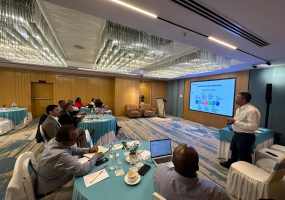
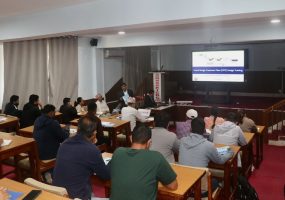
Following the signing of a Memorandum of Understanding (MoU) to implement the Scalling of Citywide Inclusive Sanitation Service System program, Mayor Maharjan stood on stage to share lessons learned and experiences in implementation.
According to him, the municipality had previously observed various practices on public toilets and fecal sludge management in countries such as India’s Odisha state and Bangladesh. Some of these have already been implemented in Lalitpur, adapted to the city’s geography, infrastructure, and economic capacity.
He recalled, “In one hostel in Odisha, the sanitation system was highly effective. When I returned to Nepal, I was eager to implement it, but due to some practical difficulties at the time, it was not possible.” He explained that the absence of a formal MoU at the time meant implementation was not mandatory. “Now, we will pilot a fecal sludge management project either at Pulchowk Engineering Campus or the Nursing Campus,” he committed.
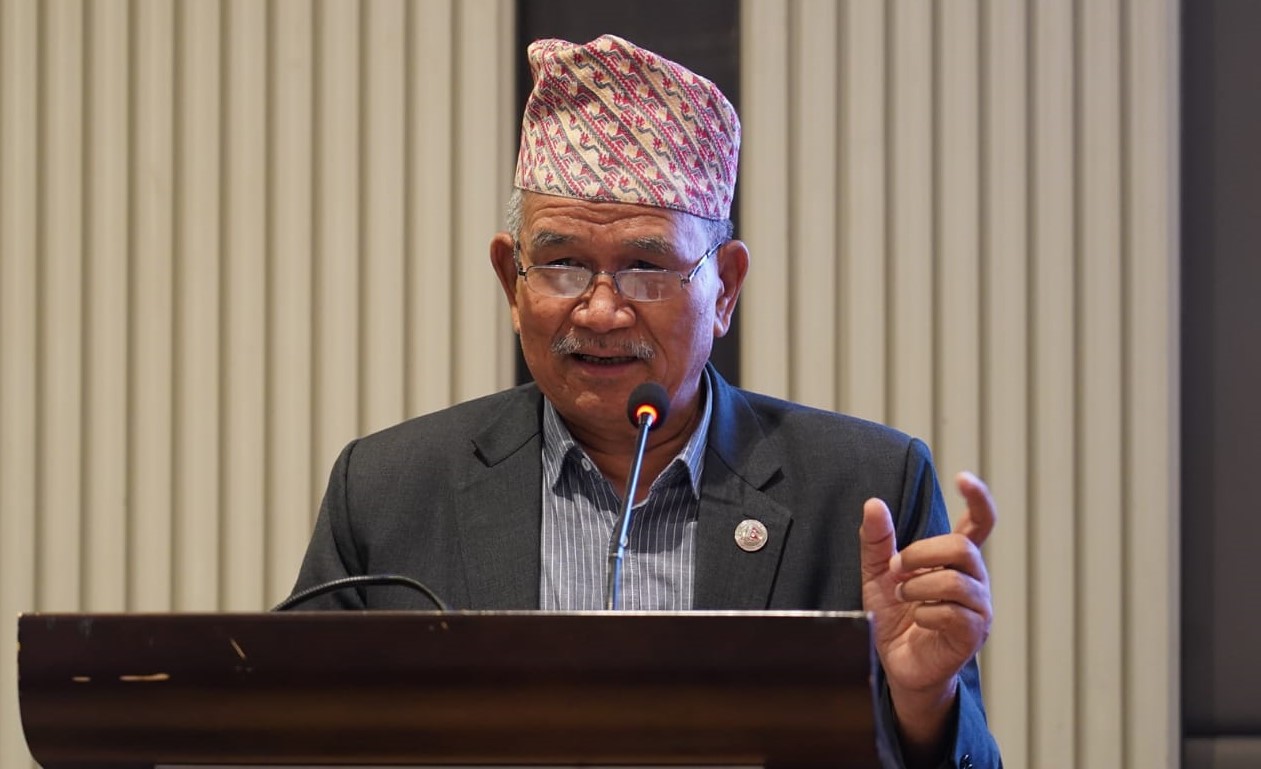
According to Mayor Maharjan, Lalitpur Metropolitan City has been experimenting with public toilet and sanitation systems for decades. Recalling his experiences during the Panchayat era, he said, “When Dor Bahadur Bista returned from working in Jumla, he introduced the concept of Sulabh toilets, which was applied in Kirtipur.”
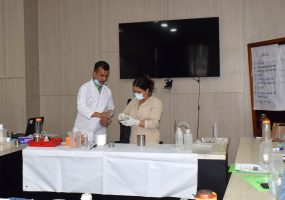
“The Sulabh system separated sludge into a compartment where solids remained while liquids drained into another. Once one compartment was filled, it was closed, and the other was used. About seven months later, the closed compartment would turn into odorless compost. This was accepted as an environmentally friendly practice,” he recounted.
Remembering his time as the ward chairperson of Pulchowk Ward No. 3 in Lalitpur Municipality, he added, “Back then, we operated six to seven such toilets. Even today, this system could be highly beneficial in the rural areas of the municipality.”
Mayor Maharjan stressed that not all practices can be directly applied everywhere due to differences in geography and economic conditions, so it is essential to adopt models that fit local contexts.
From Bangladesh Visit to the Concept of Smart Toilets
During a past visit to Bangladesh, Maharjan observed a key feature in public toilets—the inclusion of a bathing space. “I realized that adding a small shower area in each toilet would be convenient for citizens. Upon returning from Bangladesh, we incorporated this into the Smart City concept,” he said.
An advanced public toilet was built at Patan Durbar Square to address the needs of tourists. Currently, many wards in the metropolis operate such smart toilets, with nine more under construction.
“It Must Be Made Worthy of Replication”
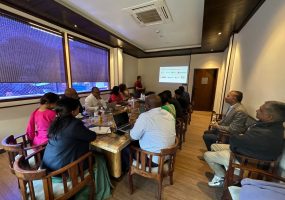
Mayor Maharjan remarked, “The MoU signed today by seven municipalities is just a starting point for achieving safe sanitation. The next steps are implementation and partnership.”
He stressed the need to meet again within the year among the seven municipalities to exchange progress, challenges, and feedback. “Let others learn from what we’ve done, and let us learn from others. This is the path of cooperation and prosperity,” he emphasized.
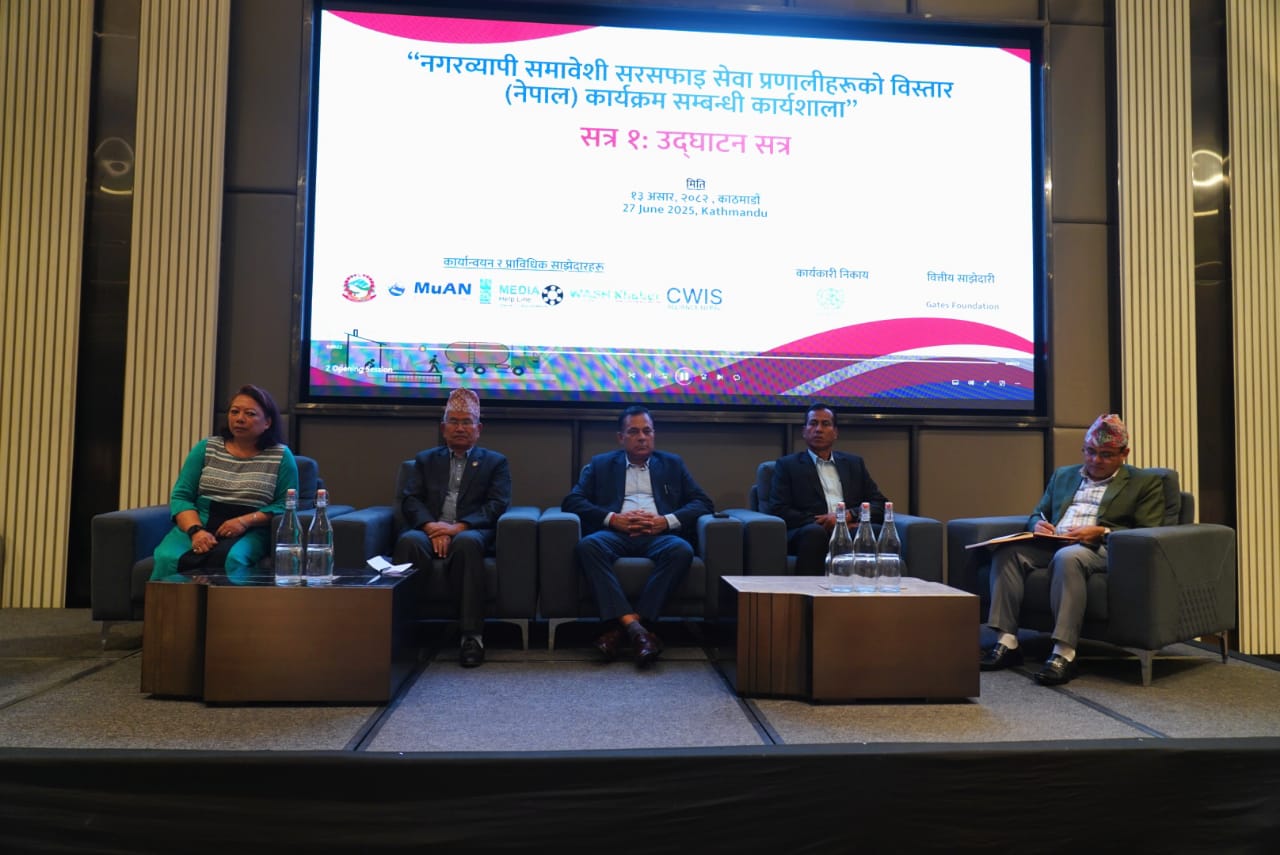
With financial management by the Gates Foundation and UN-Habitat’s implementing role, the “Scalling of Citywide Inclusive Sanitation Service System Program” is being implemented in Godawari Municipality of Kailali, Sharada Municipality of Salyan, Ghorahi Sub-Metropolitan City of Dang, Gorkha Municipality of Gorkha, Lalitpur Metropolitan City of Lalitpur, Lahan Municipality of Siraha and Mechinagar Municipality of Jhapa.
With technical support from WaterAid Nepal, the Municipal Association of Nepal (MuAN), and the Ministry of Water Supply/Department of Water Supply and Sewerage Management the program will work in participating municipalities to draft municipal-level laws, regulations, procedures, policies, or strategies related to fecal sludge management and update related data in the N-WASH system; and undertake other related activities.
The “Scalling of Citywide Inclusive Sanitation Service System Program” will be implemented until December 2026.