594 पटक हेरिएको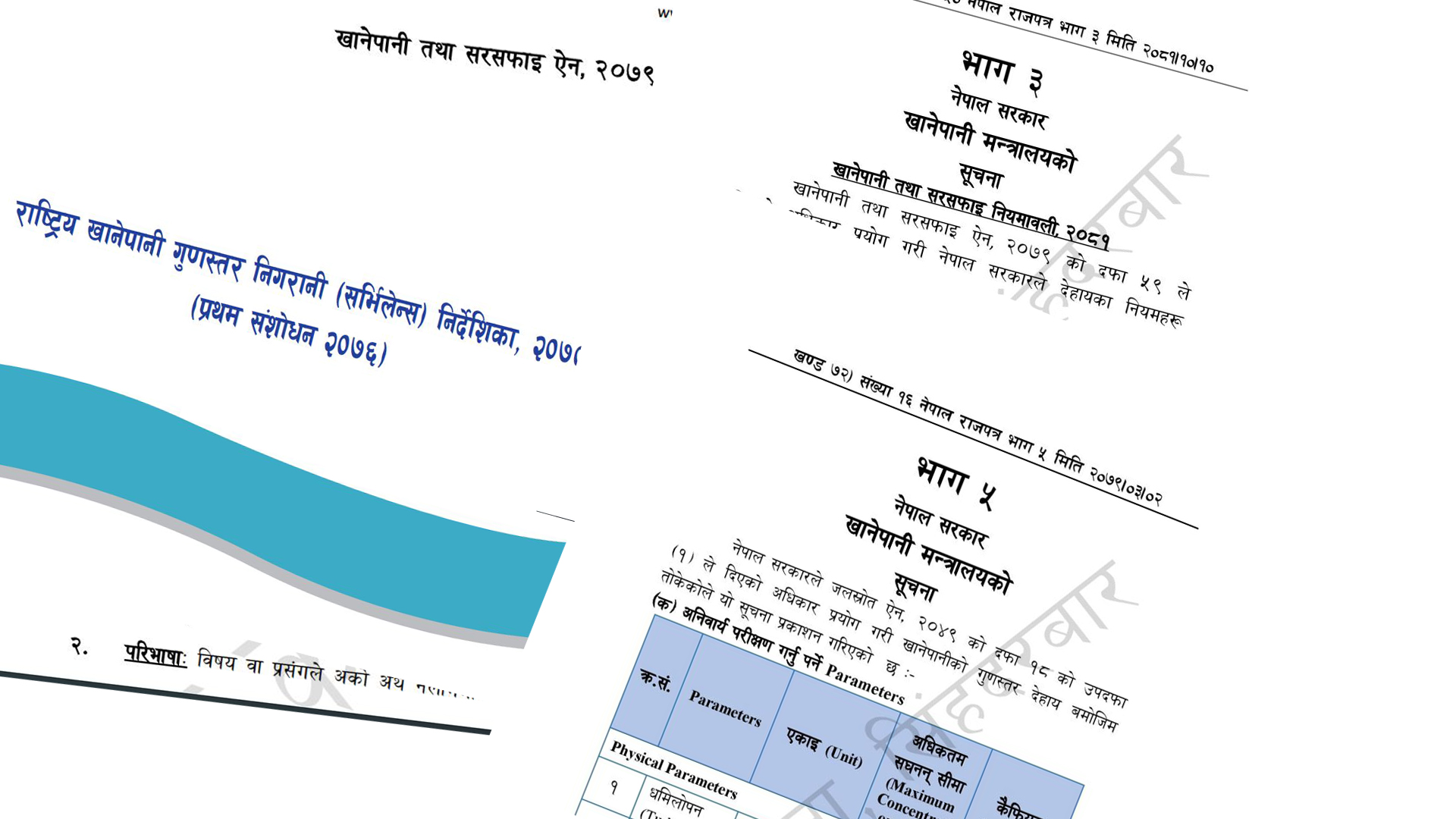
Safely managed sanitation is directly linked to public health, environmental protection, and social dignity. Unsafe disposal of human excreta contaminates water sources, spreads diseases, disrupts environmental balance, and undermines human rights. To address these challenges, legal instruments have been established as a fundamental basis for management.
Effective implementation, institutional accountability, and citizen participation together can make faecal sludge management sustainable and impactful.
In Nepal, the Constitution, along with various acts, regulations, and policies, has defined safe sanitation as both a fundamental right and a responsibility of the state. The Constitution guarantees the right to live in a healthy environment as a fundamental right, thereby providing a strong legal foundation for sanitation.
Similarly, the Water Supply and Sanitation Act 2079 and the Local Government Operation Act assign municipalities and rural municipalities the responsibility for sanitation management, construction of public toilets, waste management, and safe faecal sludge management. These legal provisions have clarified institutional responsibilities and strengthened enforcement.
International legal commitments are equally important. Under Sustainable Development Goal (SDG) 6, Nepal has pledged to achieve “safe water and sanitation for all.” To realize this, the government’s Sanitation Master Plan has legally mandated directives for open defecation free (ODF) campaigns, toilet accessibility, and safe faecal sludge management.
The usefulness of legal instruments is manifested in three key areas:
-
Standard Setting: Laws establish minimum requirements for toilet construction, waste management, and wastewater treatment. This helps curb unsafe practices and maintain health and environmental standards.
-
Implementation & Sanctions: Laws impose fines or penalties on individuals or institutions violating regulations. This ensures accountability and discipline.
-
Right Protection: Legal instruments guarantee citizens the right to access safe sanitation services, which must be ensured by local governments and the state.
However, the full effectiveness of legal instruments remains challenging. Despite the existence of laws, their impact is reduced in rural areas due to lack of infrastructure, shortage of technical skills, limited awareness, and inadequate resources.
Weak coordination among implementing agencies, poor monitoring and inspection systems, and limited enforcement of penalties are also major shortcomings.
Therefore, three factors are essential to translate the usefulness of legal instruments into practice:
-
Capacity and resource enhancement at the local level,
-
Transparency and strict enforcement of laws, and
-
Community-level awareness and active stakeholder participation.
Laws become meaningful only when applied in practice, not merely confined to paper. Effective implementation, institutional accountability, and citizen participation together can make faecal sludge management sustainable and impactful.
Thus, legal instruments serve as the fundamental framework and guiding principles for faecal sludge management. Their usefulness will be maximized only when enforcement, accountability, and participation move forward in a balanced way. In this manner, legal tools provide a long-term foundation for safeguarding health, the environment, and human rights.
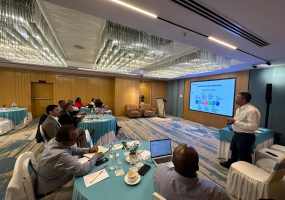
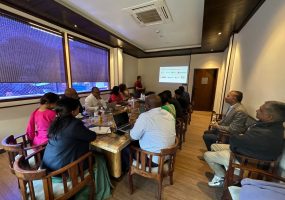
For this purpose, with financial support from UN-Habitat, a program for the Scalling of Citywide Inclusive Sanitation Service System is being implemented in seven municipalities across all seven provinces of the country.
In Godawari Municipality of Kailali, Sharada Municipality of Salyan, Ghorahi Sub-metropolitan City of Dang, Gorkha Municipality of Gorkha, Lalitpur Metropolitan City of Lalitpur, Lahan Municipality of Siraha, and Mechinagar Municipality of Jhapa, this program has been launched.
The program, which will run until December 2026, will provide the following technical support to the municipalities in coordination with WaterAid Nepal, the Municipal Association of Nepal, the Ministry of Water Supply, the Department of Water Supply and Sewerage Management, and UN-Habitat:
-
• Formulation of at least one act, regulation, guideline, plan, policy, or strategy related to city-level faecal sludge management.
-
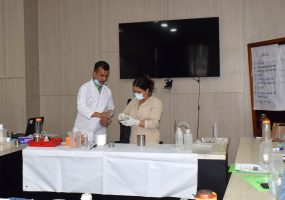
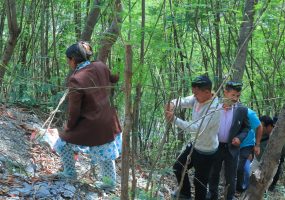
• Collection of data on faecal sludge management and updating it in the National WASH (N-WASH) database.
-
• Collection of data or status information on sanitation-related performance indicators and standards and updating it in N-WASH.
-
• In municipalities with faecal sludge treatment plants, collection of data on treated wastewater discharged from three plants and updating it in N-WASH.
-
• In municipalities with faecal sludge treatment plants, providing support to prepare or update their business plans.
-
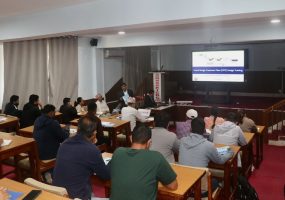
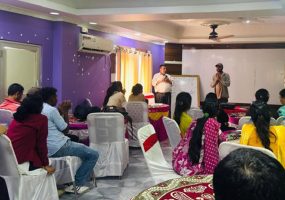
• Conducting various orientation sessions, trainings, and capacity development programs on citywide inclusive sanitation and faecal sludge management for municipalities.
-
• The Municipal Association of Nepal will monitor and evaluate the overall program and provide necessary recommendations to the municipalities.