64 पटक हेरिएको
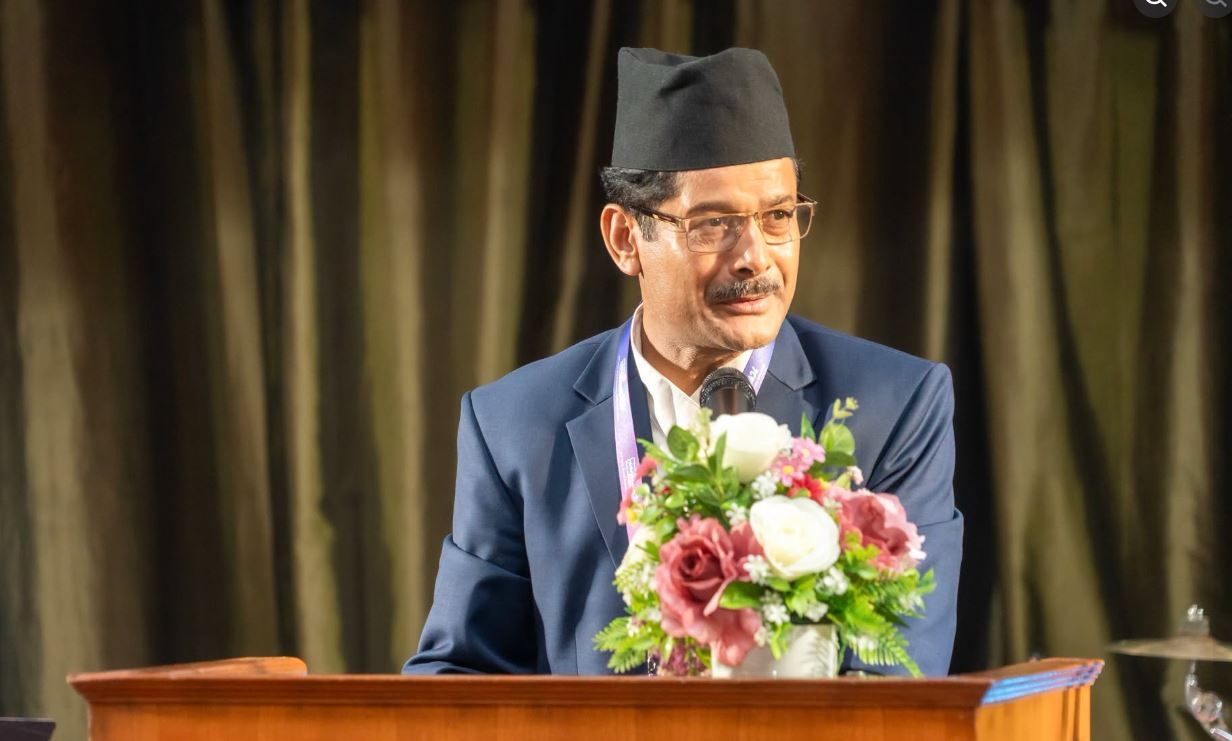
Kathmandu : Member of the House of Representatives Bodh Narayan Shrestha has urged the international community to increase investment in climate-resilient and disaster-resistant sanitation infrastructure to minimize the impacts of climate-induced disasters on water, sanitation and hygiene (WASH) services.
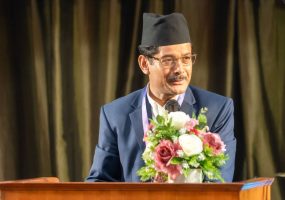
Addressing the World Toilet Day 2026 event held at the Asian Institute of Technology (AIT) in Thailand, Shrestha said climate change was increasing disaster risks, particularly in Nepal’s mountainous regions, with serious consequences for WASH services.
Highlighting the repeated disruption of water and sanitation services due to earthquakes, floods and landslides, he emphasized the need to develop sanitation systems that remain safe and functional during disasters. He also pointed out that mountain hazards extend beyond heavy rainfall, as ice collapses, landslides, debris flows and river blockages can trigger sudden disasters downstream.
Recalling the devastating Bhotekoshi–Trishuli flood on August 26, 2026, and floods in the Budhigandaki and Kaligandaki river basins, Shrestha said these disasters had severely affected local communities. He expressed gratitude to the international community, including Thailand, for supporting affected families during the difficult period.
He also expressed support for Prime Minister Balen Shah’s call for global investment in climate justice and urged international partners to make climate finance more accessible to governments and vulnerable communities.
Shrestha stressed the need to translate Nepal’s existing climate commitments on climate-resilient WASH into well-prepared and adequately funded programmes. He called for greater investment in research, innovation and inclusive sanitation technologies, including ecological sanitation, biogas-based toilets, portable toilets, faecal sludge management and disaster-resilient infrastructure.
He further emphasized the importance of community engagement, early warning systems and locally appropriate approaches that take cultural practices, social norms and people’s behaviour into account.
During the event, Shrestha also shared Nepal’s experience in the Open Defecation Free (ODF) movement. He described Nepal’s declaration of ODF status in September 2019 as a remarkable achievement and an important example for South Asia.
According to him, sanitation coverage in Nepal increased from 46 percent in 2010 to 99 percent by September 2019 through a nationwide social movement led by the government, with active community participation, political commitment, civil society engagement and unconditional support from development partners. He noted that the achievement was made without providing subsidies for household toilet construction.
He also highlighted the role of Nepal’s Sanitation and Hygiene Master Plan in guiding coordinated efforts across different sectors and levels of government.
However, Shrestha expressed concern that progress towards total sanitation had slowed following the ODF declaration. He said achieving the global sanitation target under Sustainable Development Goal 6 by 2030 remained a serious challenge. He called for mobilizing the same collective energy and commitment that drove the ODF movement to accelerate progress towards total sanitation.
Shrestha also expressed Nepal’s interest in collaborating with the World Toilet Organization and Singapore’s Restroom Association. He said Nepal could learn valuable lessons from Singapore’s public toilet management system and its Happy Toilet Programme, particularly in maintenance standards, operator training and the use of visitor feedback to improve services.
Highlighting the connection between sanitation and tourism, he said clean, accessible and well-maintained public toilets were essential to improving visitors’ experiences at Nepal’s heritage sites and mountain trails. He also called for promoting tourism through WASH campaigns and invited the international community to visit Nepal, the home of Mount Everest and the birthplace of Lord Gautam Buddha.
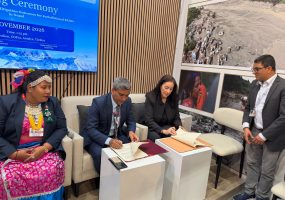
At the conclusion of his address, Shrestha made a commitment, on behalf of the Nepali delegation, to establish a Loo Model Public Toilet in Nepal. He expressed confidence that the World Toilet Organization would provide the necessary technical support.
He concluded by calling for collective action to ensure that every toilet protects human dignity, every sanitation service safeguards public health and every investment strengthens resilience.