145 पटक हेरिएको
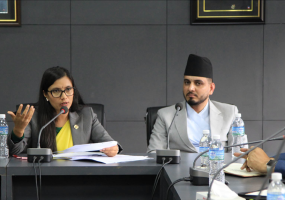
Kathmandu: The current executive committee of the Freshwater Action Network South Asia (FANSA) Nepal Chapter, led by Bhawana Sharma, will continue for another three-year term. The decision was made unanimously by the Annual National Meeting held in a hybrid format on Friday.
Currently, 23 organizations are members of the FANSA Nepal Chapter. The network brings together civil society organizations and networks working in the water, sanitation and hygiene (WASH) sector and has been raising voices on issues related to policy formulation, budgets, access to services, inclusion, and citizens’ rights to water and sanitation. The current committee will continue to lead the network for the next three years.
The current committee is led by Bhawana Sharma, who is an advisor to the Environment and Public Health Organization (ENPHO). She was selected as the Convener of the FANSA Nepal Chapter on December 30, 2020, when she was serving as the Executive Director of ENPHO.
With the decision to continue the Sharma-led committee for the new term, FANSA Nepal is expected to further strengthen the role of civil society in the water, sanitation and hygiene sector in the coming years.
Who Are on the Current Committee?
In FANSA Nepal’s National and Steering Committee, Bhawana Sharma from the Environment and Public Health Organization (ENPHO) serves as the Convener. Rajendra Aryal, President of the Federation of Water and Sanitation Users Nepal (FEDWASUN), serves as the Co-Convener.
Similarly, representatives from Lumanti Support Group for Shelter, NGO Forum for Urban Water and Sanitation, Karnali Integrated Rural Development and Research Centre (KIRDARC), Social Awareness Centre (SAC) Nepal, and Media Academy Nepal (MAN) are members of the National and Steering Committee.
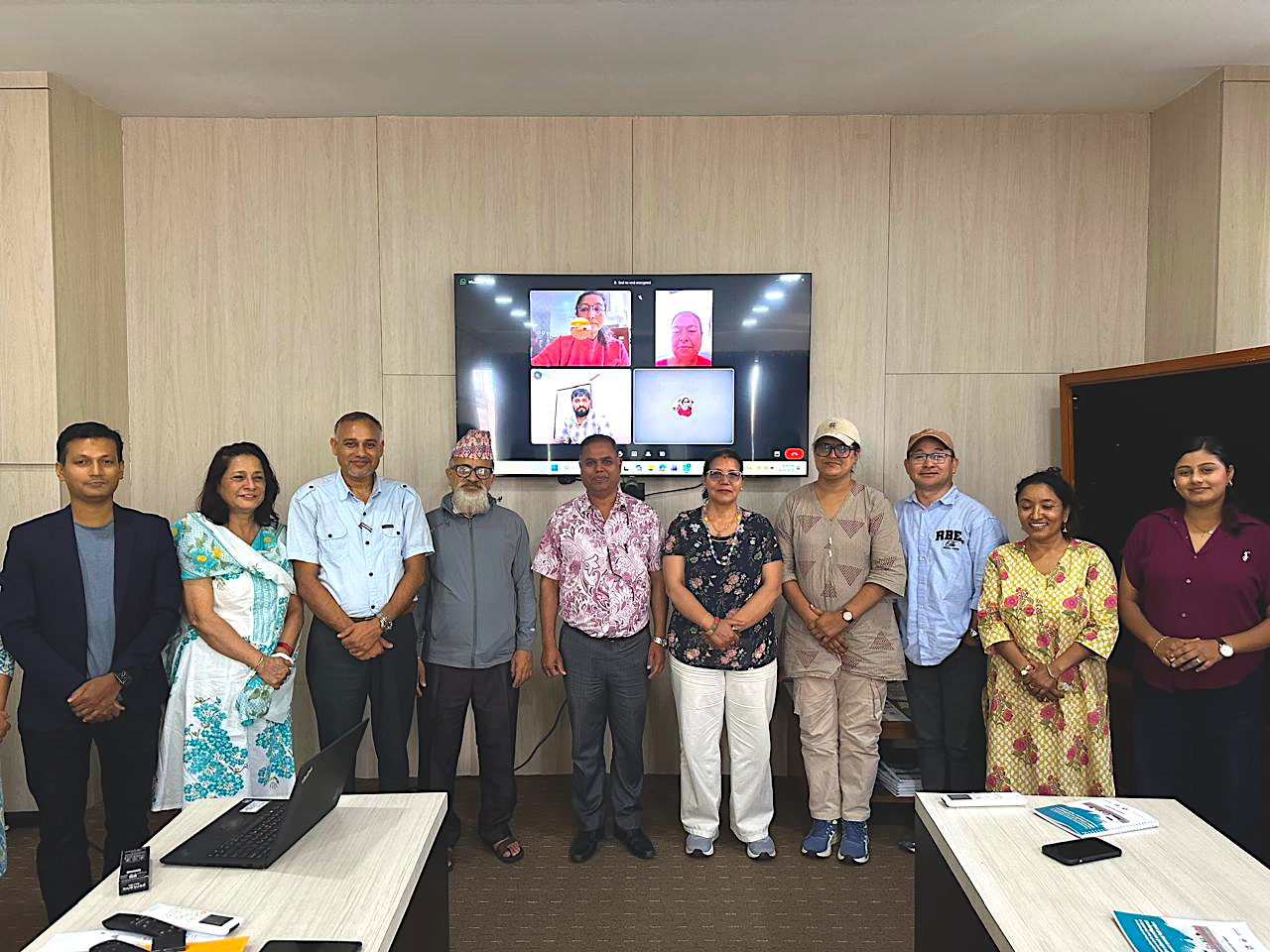
Representatives from organizations including Community Women’s Forum, Nepal Women Unity Society, Rural Awareness and Development Organization Nepal, WASH Media Forum Nepal, Natural Resource Management Association (Himawanti) Nepal, and Panchabati Rural Development Centre (PRDC) are also members of FANSA Nepal’s National Committee. The committee also includes representation from different provinces and regions.
Following her unanimous selection for the upcoming term, Convener Bhawana Sharma thanked everyone and said that FANSA’s key objectives are to strengthen civil society, promote collaboration among different organizations, expand the network, and draw the attention of the government and other decision-makers to important water and sanitation issues through evidence-based advocacy.
She said that FANSA has been working to establish water and sanitation as human rights, increase necessary investment and budgets in the WASH sector, ensure civil society participation in the implementation of policies and programmes, and bring the voices of marginalized communities into decision-making processes.
Expressing her expectation of continued support and cooperation from all stakeholders, she said FANSA would continue to prioritize climate change, disaster risks, safe and sustainable WASH services, equality, and inclusion as important areas of advocacy.
In Nepal, FANSA, in collaboration with various member organizations and partners, has been conducting studies, collecting evidence, and carrying out advocacy activities on issues including sanitation workers, faecal sludge management, access to water and sanitation services, and accountability of service providers.
FANSA Concept Developed in 2007, Nepal Connected Since the Beginning
The concept of FANSA, or Freshwater Action Network South Asia, was developed in 2007. At the time, it was recognized that a separate regional network was needed to effectively bring the voices of civil society organizations working in water and sanitation across South Asia into national, regional, and international policy-making processes.
As part of this process, consultations were held with more than 200 stakeholders and organizations from South Asian countries, including Bangladesh, India, Nepal, and Pakistan. As a result, FANSA was formally launched in Nepal in January 2008.
FANSA was established as a civil society network linked to the global Freshwater Action Network (FAN). Its core objective is to bring local experiences, community concerns, and the voices of civil society on water and sanitation issues into policy-making and decision-making processes.
Nepal has been one of the important countries associated with FANSA since its inception. When FANSA was formally established in 2008, Nepal actively participated in the regional consultation and network-building process.
During its initial years, FANSA’s regional secretariat was hosted by Modern Architects for Rural India (MARI) in India. The secretariat, which remained in India from 2008 to 2020, was moved to Nepal in 2021. Currently, FANSA’s regional secretariat is led by Lajana Manandhar, founder of Lumanti Support Group for Shelter, based in Lalitpur.
With this, Nepal has emerged as an important hub for civil society coordination and advocacy in the water, sanitation and hygiene sector in South Asia.
In Nepal, FANSA has been working in collaboration with various civil society organizations and networks on issues related to WASH policies, budgets, inclusion, and access to services.
In particular, guided by the principle of “Leave No One Behind,” the network has prioritized the water and sanitation rights of marginalized communities, women, persons with disabilities, and sanitation workers.
Network in Eight South Asian Countries
FANSA has national chapters in eight South Asian countries: Afghanistan, Bangladesh, Bhutan, India, Maldives, Nepal, Pakistan, and Sri Lanka.
Hundreds of civil society organizations working in the water and sanitation sector across the region are associated with the network. FANSA facilitates the exchange of experiences among member organizations and countries while building a collective civil society voice on common water and sanitation challenges facing South Asia.
One of FANSA’s key areas of work is ensuring civil society participation in the South Asian Conference on Sanitation (SACOSAN) process, monitoring commitments made by South Asian governments, and advocating for increased investment and equitable access to WASH services.
Although FANSA is a regional network focused on South Asia, it is also connected to global water and sanitation movements. It has collaborated with global campaigns and processes such as Sanitation and Water for All (SWA) and End Water Poverty.
Through these efforts, FANSA has been playing an important role in bringing water and sanitation issues and experiences from local communities to national, regional, and global WASH discussions.