493 पटक हेरिएको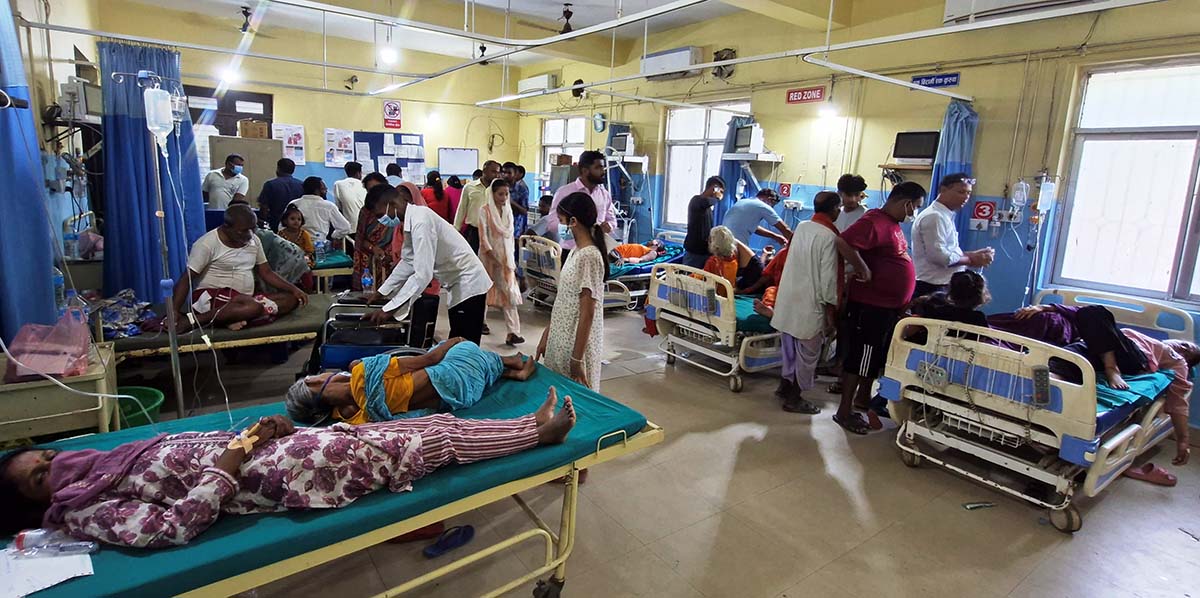
Kathmandu : More than a week after the cholera outbreak began in Birgunj, the situation is still not under control. Currently, nearly 200 people have been infected in Parsa district. In Birgunj and Pokhariya, the total number of cases has reached 193.
According to data released by the Birgunj Metropolitan City Office at 9:30 am on Tuesday, 176 cholera cases have been reported in the metropolitan area alone, while 17 cases have been confirmed among patients with diarrhea who visited Pokhariya Hospital.
By Tuesday morning, a total of 899 patients with diarrhea and cholera had visited various hospitals in Birgunj, 23 of them being new cases. Of these, 791 patients have returned home after treatment. Among the 176 cholera patients in Birgunj, 162 have recovered and returned home, while 14 are still receiving treatment in hospitals. Currently, 108 patients with diarrhea are under treatment at different hospitals in Birgunj.
Even after more than a week, emergency beds in hospitals remain fully occupied, with children, mothers, and fathers alike affected. The root cause of all this suffering is the lack of safe drinking water and proper sanitation.
Ramlila Devi of Birgunj, exhausted from rushing her two children to the hospital, describes how her children appeared healthy in the morning but became weak and dehydrated by the afternoon due to diarrhea and vomiting. The doctor explained, “These are symptoms of cholera, but confirmation comes only after testing.” She is not alone; hundreds of families are living in similar fear.
Previously, fetching water from community taps and wells was routine. Who could have imagined that same water would lead to cholera?
Why Safe Water and Sanitation Are Crucial
Cholera is not just a disease, it is a test of our awareness. No community can remain safe without access to clean water and proper sanitation. Unsafe disposal of human feces is one of the deadliest practices for public health.
Therefore:
-
√ Use toilets for defecation only, and construct septic tanks in ways that prevent leakage into the ground.
-
√ Ensure the distance between septic tanks and water supply pipes is maintained properly.
-
√ Drink only boiled or filtered water.
-
√ Promote toilet use consistently; incomplete sanitation practices continue to spread disease in some areas.
-
√ Even small habits like washing hands can prevent serious illnesses.
These simple practices, though they may seem minor, are vital-as the crisis in Birgunj has starkly demonstrated.
What Do the Statistics Say?
According to the World Health Organization (WHO), every cholera outbreak worldwide is directly linked to water and sanitation conditions. A recent joint report by WHO and UNICEF shows that in Nepal, 2 in 5 people do not have access to safely managed sanitation, 1 in 4 people lack safe drinking water, and 1 in 3 people do not have basic handwashing facilities.
These statistics are not just numbers—they reflect the reality faced by residents of Birgunj today.
Who Is Responsible?
While hospital treatment is important during a crisis, long-term solutions must be found within the community:
-
√ Local governments and water service providers must ensure safe water distribution and run sanitation awareness programs in schools and communities.
-
√ Every household should cultivate the habit of washing hands with soap.
Even small initiatives like these can bring about major changes.
The Power of Safe Water
Hari Lal Yadav of Birgunj has been using a biosand filter at home for several years. His children remain healthy, and he proudly says, “Safe water is not just convenient, it saves lives.” Individual awareness like this can protect the community from large-scale health risks.
The cholera outbreak in Birgunj teaches us a crucial lesson: safe water and sanitation are not luxuries, they are fundamental to survival. If we fail to act today, other towns and villages may face similar crises tomorrow.
The government, communities, and individuals must work together to make safe water and sanitation a top priority. Simple habits such as boiling water and washing hands with soap can become a shield saving hundreds of lives.
The painful experience of Birgunj reminds us that safe water and sanitation are essential for a healthy life.