341 पटक हेरिएको
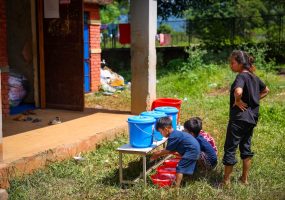
Kathmandu : Every morning, children can be seen playing in the alleys and neighborhoods of our cities. But the environment in which they play is not the same everywhere. Some streets have open drains, some are piled with garbage, and many families still lack access to safe toilets. In such a situation, the idea of “citywide inclusive sanitation” becomes a necessity directly connected to life.
Sanitation is not only about building toilets or collecting waste; it is about respecting human dignity. When every resident of a city can enjoy sanitation services with equal access, that is what inclusive sanitation truly means.
To understand this, let us take a simple example. Imagine a modern public toilet built in a ward, but it lacks facilities for a person using a wheelchair to enter. Can that toilet really be called accessible for all? The answer is clearly no. Inclusive sanitation, therefore, means ensuring that every citizen has a suitable and safe environment for use.
What benefits does this bring? First, it improves health. Open defecation and poor waste management increase illness. If everyone has access to clean water, sanitation, and hygiene, diseases such as diarrhea, cholera, and typhoid naturally decline.
Second, it boosts education and productivity. Girls in schools find it easier to continue their studies if safe toilets are available. Workers in factories are more efficient when they have access to clean water and sanitation.
Third, it promotes social justice. Many communities are left behind simply because they lack access to sanitation. For example, if disadvantaged groups or poor neighborhoods do not have safe drinking water and sanitation, their health remains weak, trapping them further in the cycle of poverty. Inclusive sanitation reduces such inequalities and helps place everyone on equal footing.
When such an initiative is carried out at the municipal level, it brings another major advantage – uniformity. If only one ward has good facilities while the neighboring ward does not, the effort will not be sustainable. Disease and infection do not recognize boundaries. That is why a shared vision and implementation across the entire municipality is essential.
Ultimately, citywide inclusive sanitation is not merely about pipes, drains, or toilets. It is about ensuring human rights. Sanitation is not a luxury – it is a basic necessity of life. Just as we cannot live without air, water, or education, sanitation too is indispensable for all.
So the question arises: “Why citywide inclusive sanitation?” It is because only a clean city with equal access for everyone can become the foundation of a healthy, dignified, and sustainable future.