427 पटक हेरिएको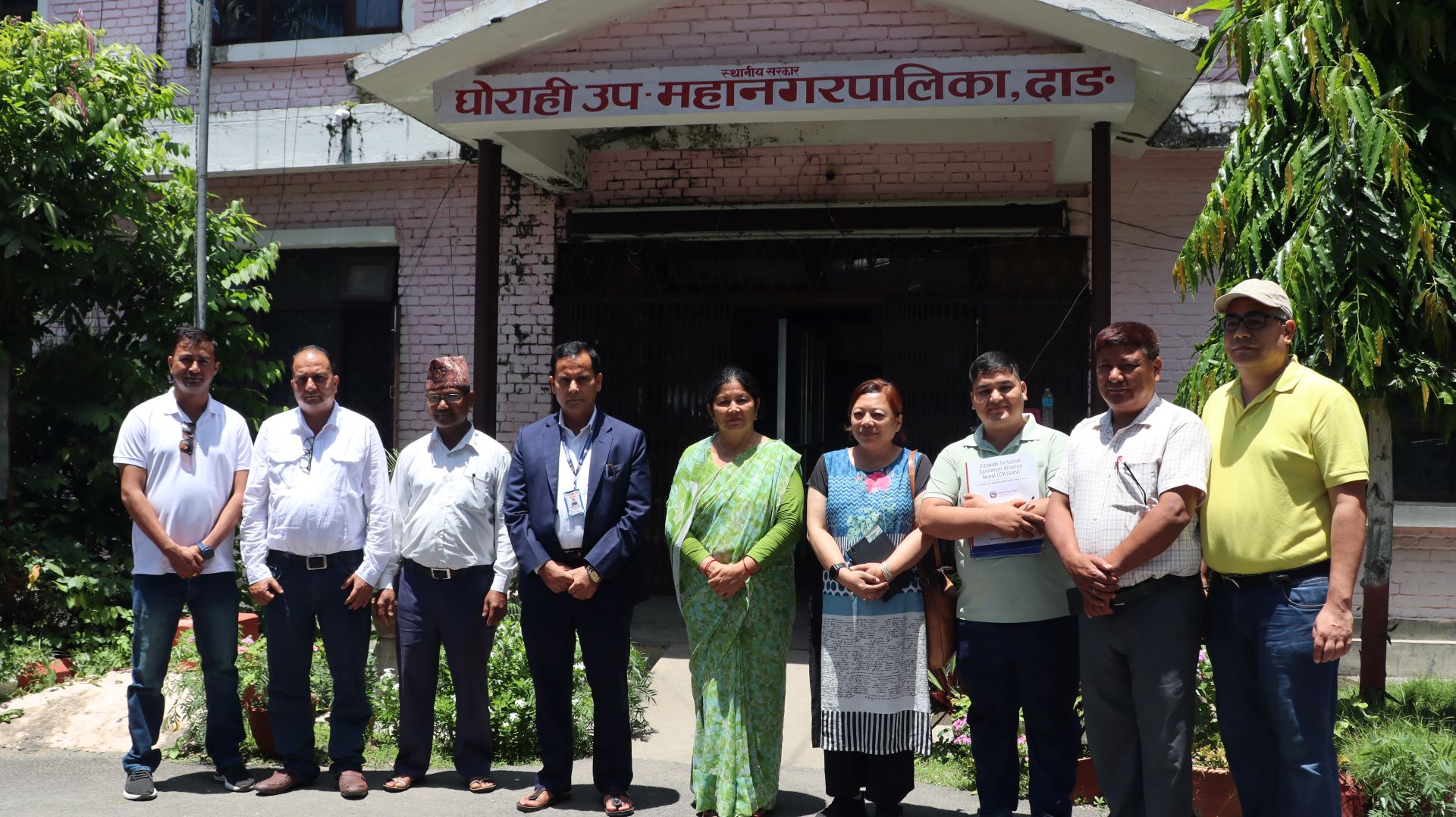
Dang: Since sanitation services have not been formally recognized by the government as part of public services, households are often forced to depend on the private sector or manage septic tank emptying themselves once tanks get full.
However, residents of Ghorahi Sub-Metropolitan City in Dang need not worry. The municipality has placed sanitation services among its top priorities, ensuring easy and accessible service delivery to citizens. Homeowners no longer have to run after private operators or waste time in unnecessary processes when tanks fill up.
“All a homeowner has to do is make a phone call to the municipality once their tank fills. Immediately, the Sanitation Management Division mobilizes staff to handle it,” said Laxman Adhikari, Chief of the Sanitation Management Division.
▶ Watch the full video here:
The service process is simple. After a phone request is received, municipal staff first visit the site to conduct a feasibility check – whether a truck can access the area, how long a suction pipe is required, and other practical considerations.
Once the preparations are complete, the homeowner is asked to pay the prescribed service fee at the municipal revenue office. The municipality then deploys a suction truck with a technical team to empty and clean the septic tank. In this way, Ghorahi Sub-Metropolitan City has made sanitation service convenient, affordable, and citizen-friendly.
That said, the municipality does not yet have a fully functioning fecal sludge treatment plant.
“Only this year we prepared a Detailed Project Report (DPR) for the treatment plant and submitted it to the Department of Water Supply and Sewerage Management,” said the Chief Administrative Officer.
This demonstrates that if local governments show commitment, they can still deliver sanitation services even in the absence of full infrastructure. Ghorahi’s model can serve as an example for other municipalities. Sanitation should not remain a compulsion dependent on the private sector but rather a responsibility and priority of local governments.
Currently, Ghorahi Sub-Metropolitan City is one of seven municipalities across the country where a Scalling of Citywide Inclusive Sanitation Service System program is being implemented.

According to UN-Habitat’s National Professional Officer (WASH) Sudha Shrestha, the program provides technical support to:
• Develop municipal-level legal instruments for fecal sludge management,
• Collect and strengthen FSM data and update it in N-WASH,
• Conduct capacity development trainings on citywide inclusive sanitation, and
• Prepare institutional frameworks.
The program is coordinated by WaterAid Nepal, the Association of District Municipalities of Nepal, the Ministry of Water Supply, and the Department of Water Supply and Sewerage Management, with financial support from the Gates Foundation and UN-Habitat serving as the implementing agency.