494 पटक हेरिएको
Hetauda : As soon as one crosses the Rapti Bridge in the Hetauda section along the Mahendra Highway, a settlement comes into view. Further along, turning left off the highway leads to Simaltar. This lies in Ward No. 11 of Hetauda Sub-metropolitan City.
Towards the left of this settlement, of about 1,800 households, near the Rapti River, lies Ratna Kumari Subedi’s house. All the members of her house suffer from various kidney-related problems. When examined in the hospital, doctors say that the cause of these problems is contaminated drinking water. “We are constantly ill and often at the hospital. The doctors have told us it’s because of the water,” Subedi said.

The issue isn’t limited to Subedi’s household; nearly every family in Simaltar have been struggling with waterborne diseases. Children and the elderly are especially prone to diarrhea, fevers, and stomach pains.
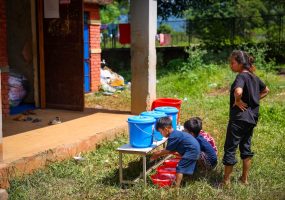
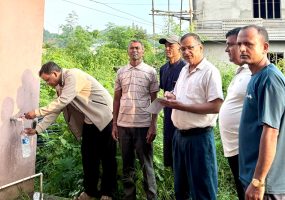
Despite these health problems, there is no organization to supply clean drinking water to the community, notes Sharda Sharma, a member of the Simaltar Community Improvement Committee. Residents rely on shallow hand pumps, which draw water from just 20-30 feet underground, further increasing the risk of waterborne diseases.
“Due to unplanned settlement, the management of safe drinking water, sewerage, roads and electricity lines has not been done properly. Most families have very limited land, which forces them to install hand pumps and toilets close together.”, says Sharma.

This has raised fears that poorly constructed septic systems might be contaminating groundwater, which is then drawn up through the hand pumps. “We suspect that our own waste is seeping into the drinking water,” says Subedi. “But we have no other option.”
Locals believe that the main reasons for groundwater contamination are the closely-constructed handpumps and toilets, and the Rapti River.
“Contaminated water flows down from upstream. The cremation grounds are nearby. All the waste from the market area across the bank also gets collected here. Dead birds and animals also end up here. The water seeps through and that is what we consume from handpumps,” Subedi continues on Simaltar, while the air was filled with the foul smell of the river.
“Due to this reason, several children and even people of our age frequently have throat pain, fever and stomach ache.”, she repeated on the effects of contaminated water.
Understanding the ill effects of consuming groundwater at shallow depths, Simaltar residents have attempted to filter the water, but the health issues persist. “Some people drink directly from the hand pumps,” says Subedi, “and even when I used a filter, we found small, slender hair-like particles in the water.”

Despite their best efforts to manage the water quality, Simaltar residents feel their attempts are insufficient. They are calling on Hetauda Sub-metropolitan City to prioritize clean water access and its fair distribution. “We’re residents within the sub-metropolitan area, yet we’re forced to drink contaminated water. The local government must address our needs with an integrated solution for drinking water, sanitation, and drainage,” urges Simaltar Community Improvement Committee’s member, Sharda Sharma.

Need further elaboration. The under-construction water project nearby needs to provide access to clean and safe drinking water to the settlement. How these households obtain access to the water project service is a challenge as all of the households are not able to afford the initial cost and regular tariff from new water project.