368 पटक हेरिएको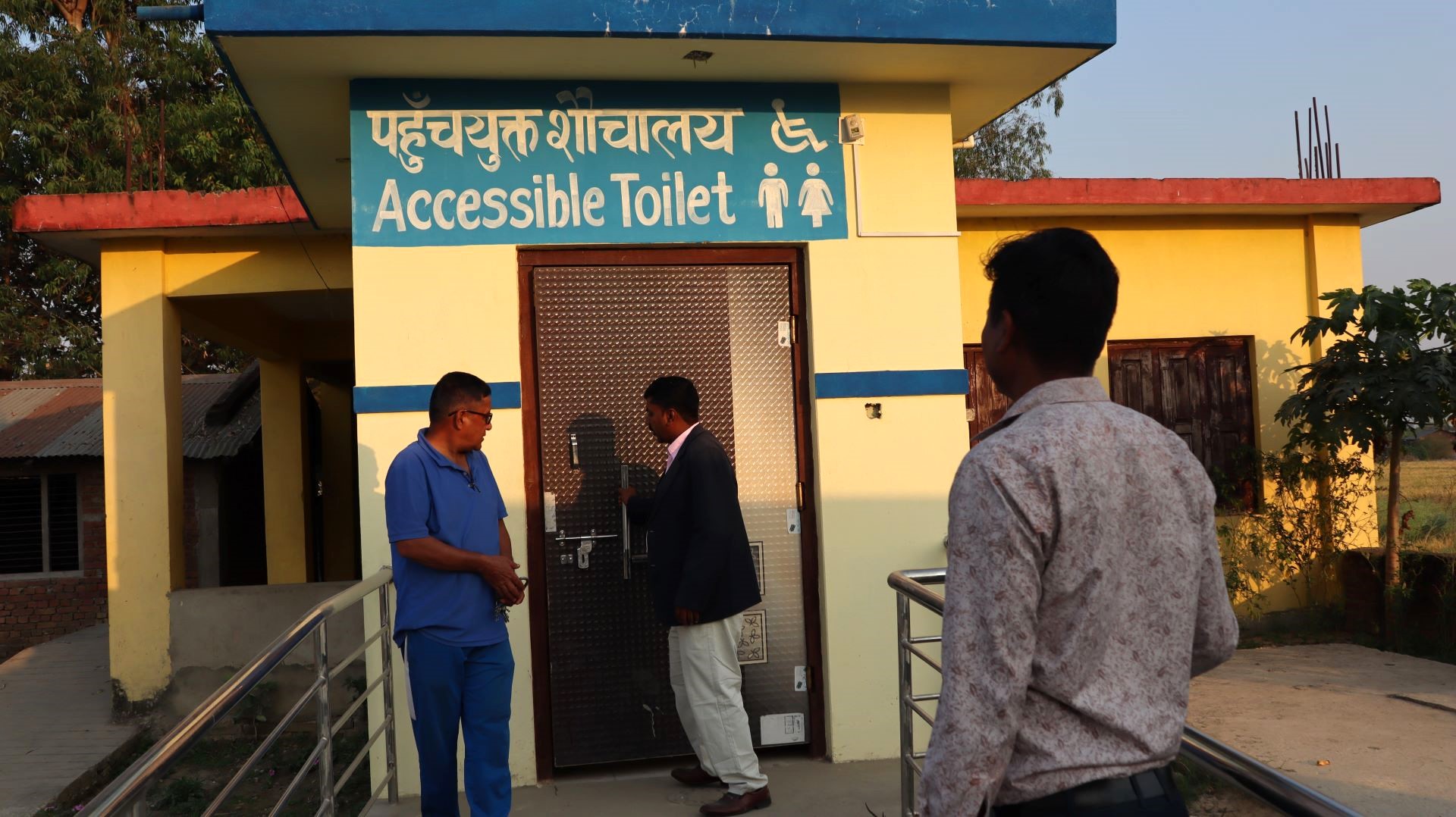
Kathmandu: Among the basic needs of daily life, access to toilets is a primary necessity. However, in many parts of Nepal, toilets are not accessible for persons with disabilities, forcing them to face difficulties even in using basic services. Accessible toilet facilities are not only essential for persons with disabilities, but equally necessary for pregnant women, new mothers, people with chronic illnesses, senior citizens, and those with limited mobility.
Accessible and disability-friendly toilet facilities are not a special privilege they are a basic requirement for equality, safety, and dignity for all citizens.
According to Minraj Khanal, Chairperson of the Municipal-Level Disability Coordination Committee, Chitwan, the ability to reach and use a toilet is directly linked with human dignity. For individuals who cannot move their hands and legs, have difficulty standing or sitting, or face mobility challenges, ordinary toilet structures are unsafe. Narrow doors, improper height, lack of railings or grab bars, slippery floors, and insufficient space significantly increase the risk of accidents.
Badri Bikram Thapa of Hetauda Sub-Metropolitan City–4 says, “When persons with disabilities cannot use a toilet, it is not because of their impairment it’s because of our infrastructure. Only when structures become inclusive, the community becomes empowered.”
Disability-friendly public toilets built in Kathmandu, Pokhara, Surkhet, and a few other places have shown their importance in practice. These toilets include wide doors suitable for wheelchair access, height-adjusted commodes, grab bars (bars for support while sitting or standing), sensor lights for nighttime convenience, and open space that allows a wheelchair to turn. These facilities support not only the users but also their caregivers.

Why is this facility essential?
1. Protection of Human Rights
The UN Convention on the Rights of Persons with Disabilities (CRPD), ratified by Nepal, legally obligates the state to make all public buildings, service points, and infrastructure accessible. This means toilets, buildings, roads, and public services must be usable independently by persons with disabilities.
If a person cannot even use a toilet, it is considered a violation of their dignity, independence, and respect. Therefore, building accessible toilets is not only an international obligation but also a constitutional right guaranteed by Nepal.
2. Health and Safety
Inaccessible or uncomfortable toilets have serious impacts on the health of persons with disabilities. Difficulties in reaching the toilet, narrow entrances, or lack of railings increase risks of accidents.
If they are forced to hold urine or stool, it may lead to urinary tract infections (UTIs), digestive issues, kidney-related complications, and other health problems. Slippery floors or unsafe structures further increase the risk of injury.
Thus, a safe toilet with enough space, non-slippery flooring, and grab bars is not merely a facility—it is a health and safety necessity.
3. Participation and Self-Dignity
If a person must rely on others to use the toilet, they are deprived of independence and dignity. Students in schools, employees in offices, or participants in public events face barriers to participation when they cannot independently use toilets.
What does an accessible toilet ensure?
√ Ability to use services without depending on others
√ Regular attendance in school and workplace
√ Increased social participation and confidence
√ A foundation for building an inclusive society where everyone has equal access
4. Useful for Everyone
Inclusive toilets are practical and beneficial not only for persons with disabilities but for all users:
√ People with temporary injuries
√ Pregnant women and postpartum mothers
√ Senior citizens
√ Parents accompanying small children
Such structures bring the concept of universal design—design usable by all people in all situations—into practice. This makes them cost-effective and long-term investments.
These four reasons prove that disability-friendly toilets are not special facilities but basic requirements for equality, safety, and dignity of all citizens.

How Can Their Assurance Be Achieved?
According to Minraj Khanal, “Ensuring accessible toilets requires efforts at three levels: policy, budget, and practice.”
√ First, local governments must make accessible designs mandatory in the building approval process. Strict enforcement of inclusive toilet provisions in building codes can bring long-term improvements.
√ Second, public buildings, schools, health institutions, bus parks, and government offices must allocate budget to construct toilets that meet minimum standards.
√ Third, awareness, training, and monitoring on accessibility must be conducted at the community level. Collaboration between civil society, disability groups, and local governments strengthens continuous monitoring.
Clean and inclusive sanitation infrastructure is essential not just for convenience, but for social justice and equality. Only through the construction and expansion of accessible toilets can city-wide inclusive sanitation goals be achieved.