446 पटक हेरिएको
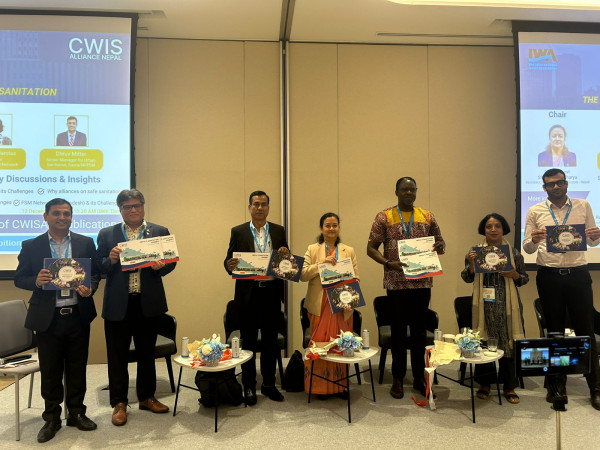
Kathmandu: On the final day of the ongoing Water & Development Congress and Exhibition 2025 in Bangkok, Thailand, a significant workshop titled “Come Together: The Challenges of an Alliance on Safe Sanitation” was successfully concluded today.
Organized by the Citywide Inclusive Sanitation Alliance Nepal (CWISAN) and coordinated by the Municipal Association of Nepal (MuAN), the workshop brought together sanitation leaders and representatives from Nepal, Bangladesh, and India. The discussions focused on how to ensure sustainable, inclusive, and safe sanitation collaboration across South Asia.
Welcoming the participants, Mr. Narulal Chaudhary, General Secretary of MuAN and Mayor of Ghorahi Sub-Metropolitan City, emphasized that the Citywide Inclusive Sanitation Alliance plays a crucial role in addressing complex urban sanitation challenges.“CWISAN has demonstrated that collaboration is the foundation for systemic transformation. Such cooperation is essential to ensure equality and dignity for all. The Municipal Association of Nepal remains committed to advancing the concept of citywide inclusive sanitation in all municipalities,” he said.
Chairing the session, Ms. Pramila Devi Shakya Bajracharya, Secretary of the Government of Nepal, highlighted CWISAN’s contribution in accelerating coordination and linking local voices with national strategies. She said, “CWISAN has laid the groundwork for national-level coordination, policy dialogue, and the scaling of innovations. This has positioned Nepal as a capable regional partner for shared learning.”
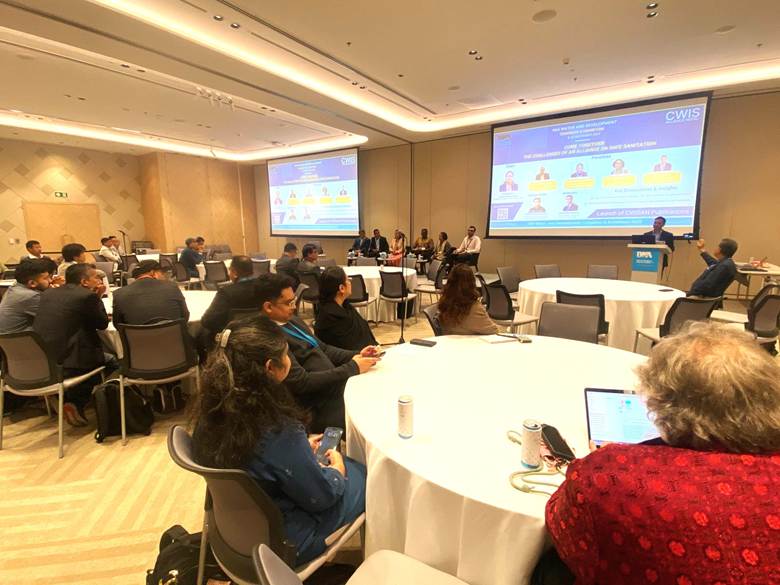
She further noted that since Nepal’s ODF declaration in 2019, the CWIS concept and transformative efforts in faecal sludge management have significantly improved the country’s sanitation landscape. According to her, CWISAN has served as an effective bridge between government, municipalities, civil society, and development partners.
As the special guest, Dr. Roshan Raj Shrestha, Deputy Director for Water, Sanitation and Hygiene from the Gates Foundation who emphasized that the alliances support political leadership and explore resource optimization strategies to maximize outputs. His remarks underscored the urgency of sustaining alliances beyond donor cycles and leveraging technical expertise within networks.
Representatives from ITN-BUET (Bangladesh) and Dasra (India) shared insights on strengthening CWIS through policy reforms, financial mechanisms, and capacity development. The discussions centered on CWISAN’s strategic areas policy and monitoring, advocacy, capacity development, resource sustainability, and the challenge of aligning diverse institutional mandates toward a common goal.
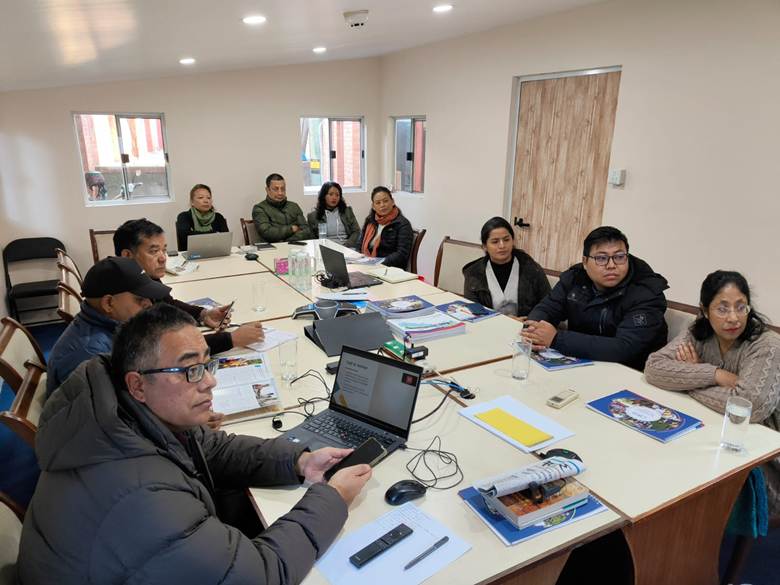
To enhance local participation, CWISAN members joined the event live from the UN-Habitat Nepal Office in Kathmandu, expressing commitment to shared learning and collaboration principles.
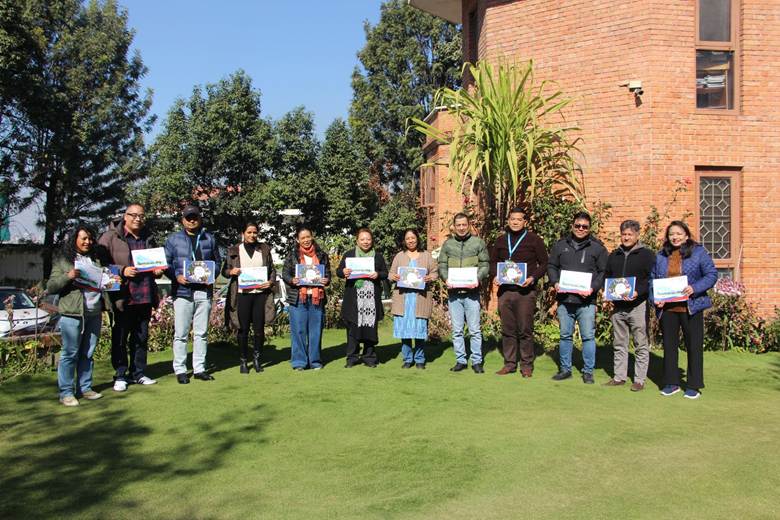
During the program, two new CWISAN publications were jointly launched:
- Nepal’s Sanitation Journey – Towards Achieving SDG 6.2 Goals
- Compendium of Best Practices in Nepal.
The publications were unveiled by the session chair, special guest Dr. Roshan Raj Shrestha, MuAN General Secretary Mayor Narulal Chaudhary, and other distinguished panel members, who highlighted the value of evidence-based practices and partner learning.
At the end of the session, participants concluded that achieving SDG 6.2 safely managed sanitation for all by 2030 requires expanded regional networks, resource sharing, and stronger collaboration among alliances to develop joint action plans.
The Water & Development Congress & Exhibition 2025, which began on Monday in Bangkok, Thailand, concluded today.
Organized by the International Water Association (IWA), the congress aimed to provide a global platform for knowledge exchange in the WASH sector bringing together experts, researchers, policymakers, development partners, and practitioners from around the world to share new technologies, research outcomes, lessons learned, and practical experiences. The event also focused on strengthening water, sanitation, and hygiene systems in developing countries such as Nepal, India, and African nations, and discussing effective policies, practical models, and innovative solutions.
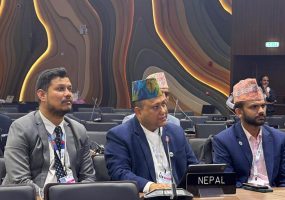
With participation from more than 60 countries and over 1,500 delegates, Nepal was represented by 47 participants, including local government mayors and deputy mayors, WASH experts, policymakers, and researchers.
Photos: UN-Habitat Nepal Office