426 पटक हेरिएको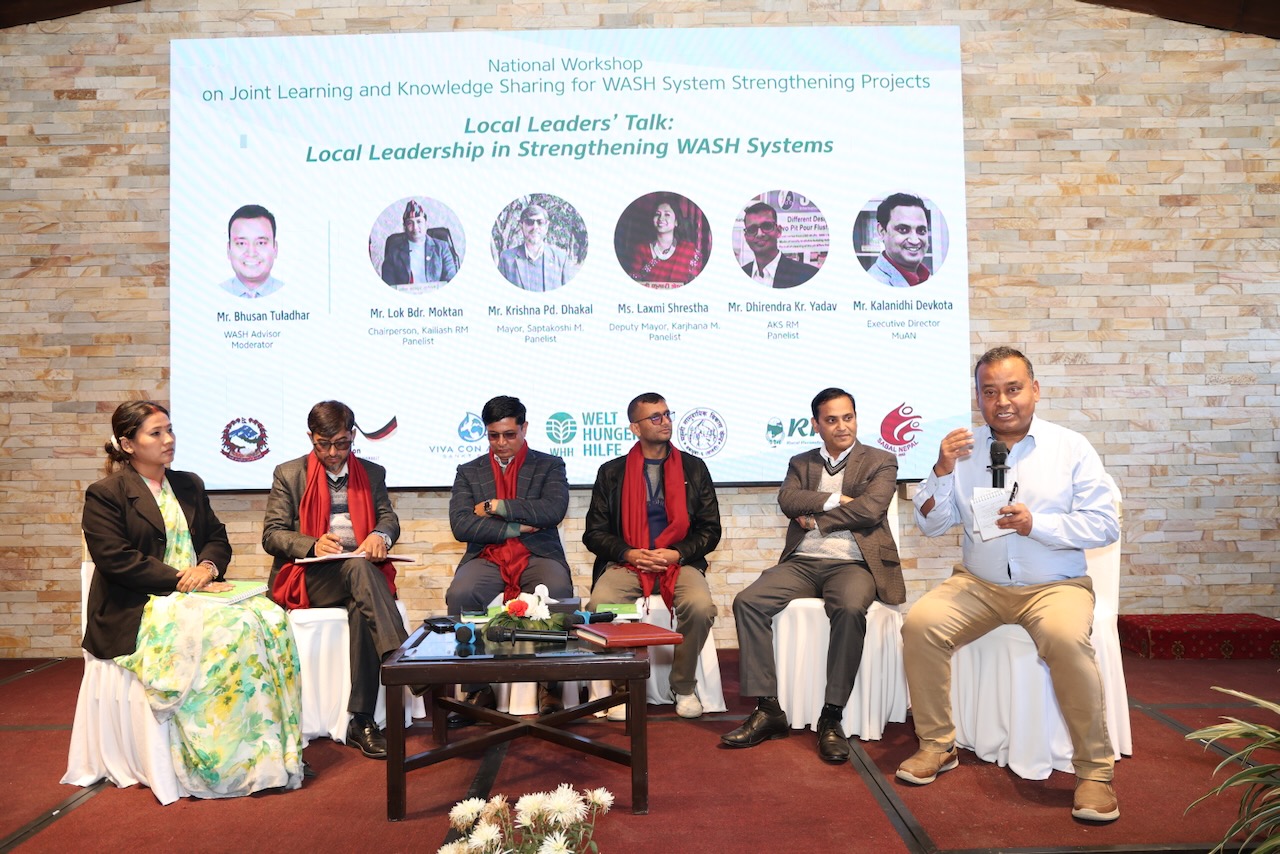
Kathmandu: Sanitation is not an issue limited only to toilet construction. The goal of safe sanitation cannot be achieved unless the entire sanitation chain collection, transportation, treatment, and safe disposal or reuse of human excreta is completed.
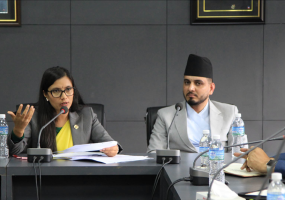
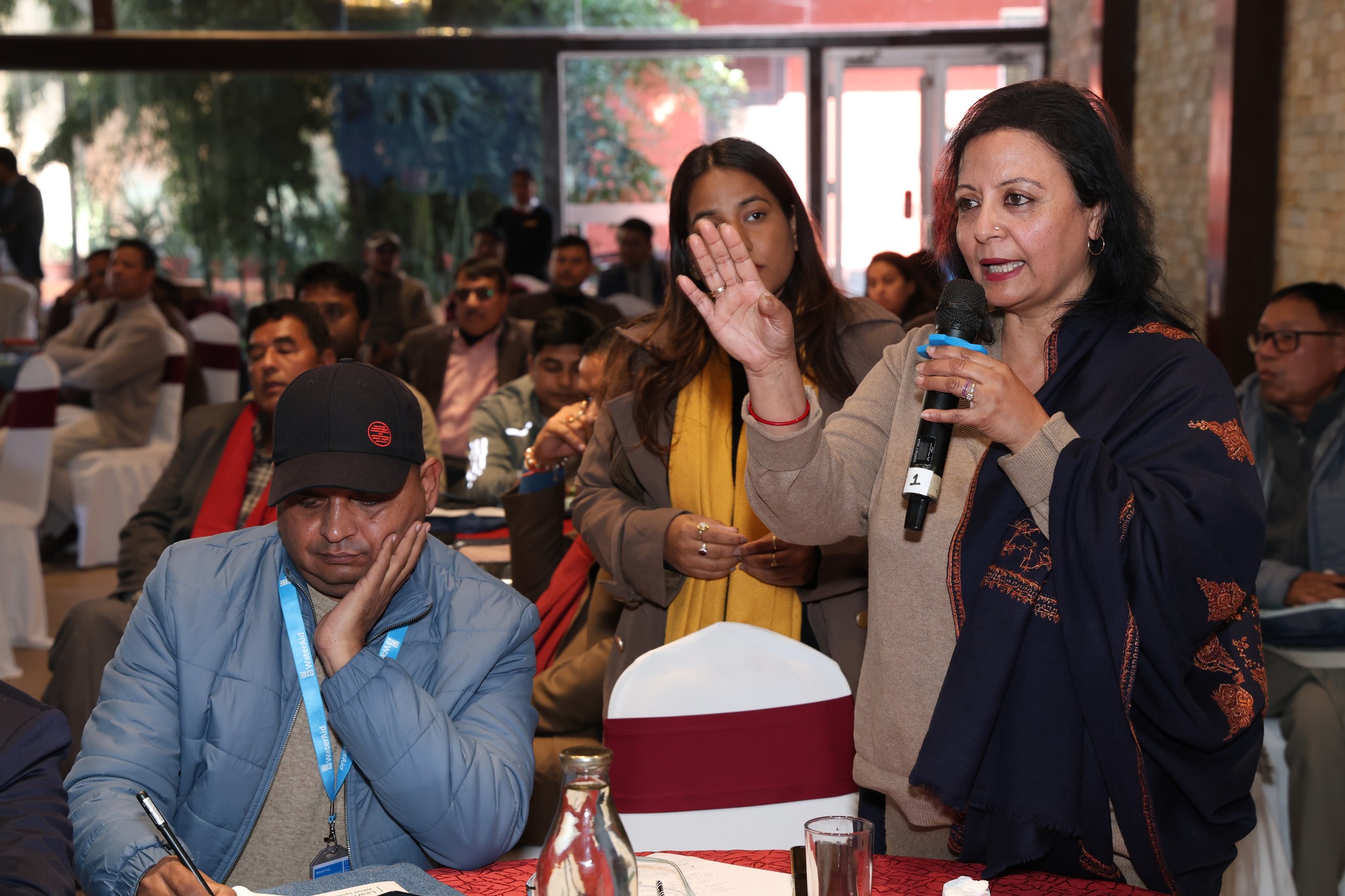
However, in reality, many local governments have not been able to establish human excreta treatment facilities at all. Raising this very concern, Seema Rajouria, Policy and Advocacy Lead at WaterAid Nepal, posed a critical question during a panel discussion on local leadership for WASH system strengthening, held under the National Workshop on Learning and Knowledge Sharing of the WASH System Strengthening Project.
Her question was direct: “What are rural municipalities and municipalities doing to manage feacal sludge ?”
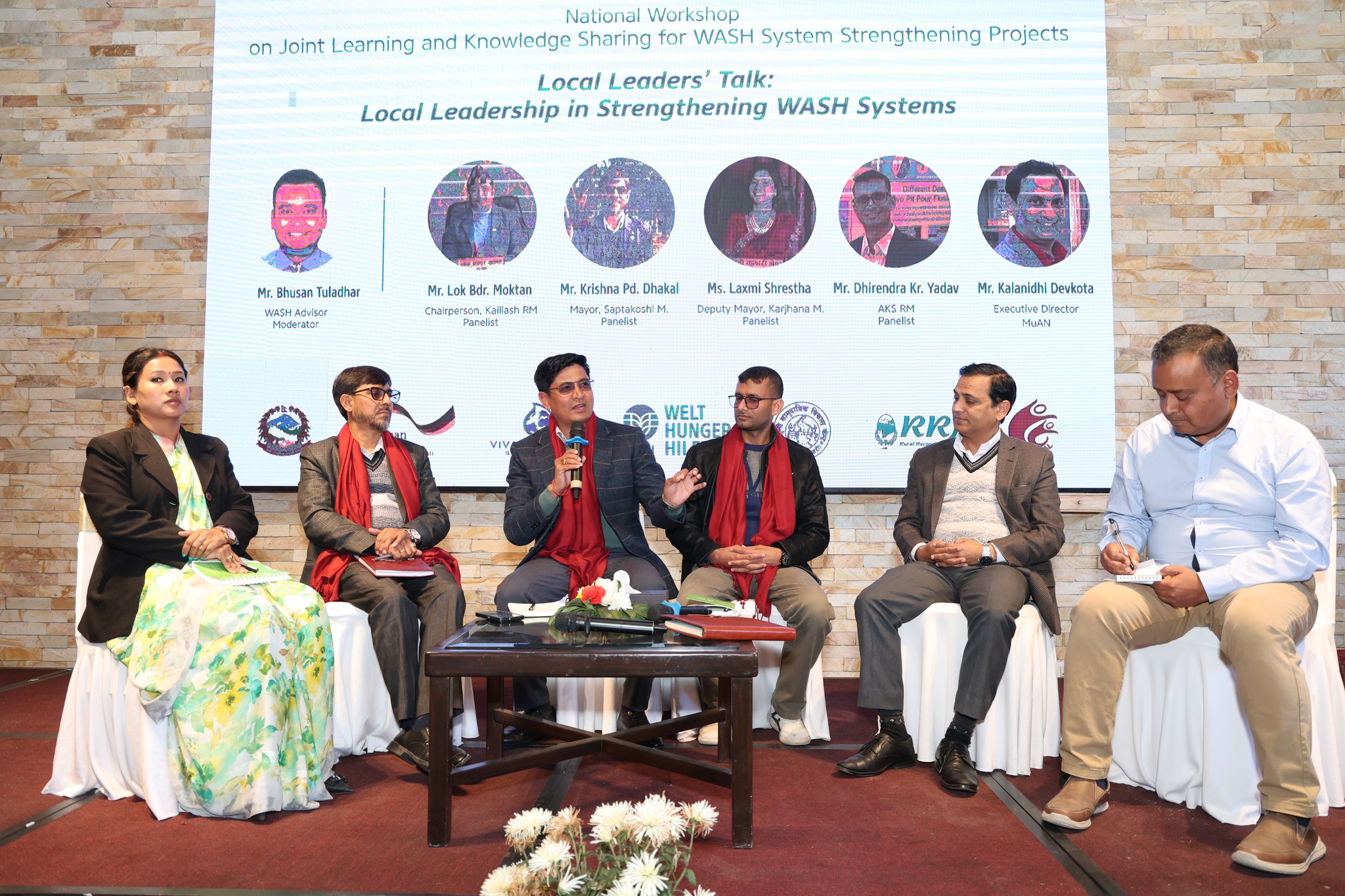
This question brought to the fore a range of issues from the capacity of local governments to policy gaps, land acquisition challenges, and complexities of inter-agency coordination. The panel featured Deputy Mayor Laxmi Shrestha of Karjanha Municipality, Siraha; Mayor Krishna Prasad Dhakal of Saptakoshi Municipality, Saptari; Chairperson Lok Bahadur Muktan of Kailash Rural Municipality, Makwanpur; Chief Administrative Officer Dhirendra Kumar Yadav of Agnisair Krishnasabaran Rural Municipality, Saptari; and Executive Director of the Municipal Association of Nepal, Kalanidhi Devkota.
Land acquisition remains a major challenge
Responding to the question, Mayor Krishna Prasad Dhakal of Saptakoshi Municipality explained that the municipality has currently procured a tanker to empty septic tanks and is managing the waste by digging pits along riverbanks. While acknowledging that this is not a long-term solution, he stated that the municipality has been compelled to adopt this practice due to the lack of alternatives.
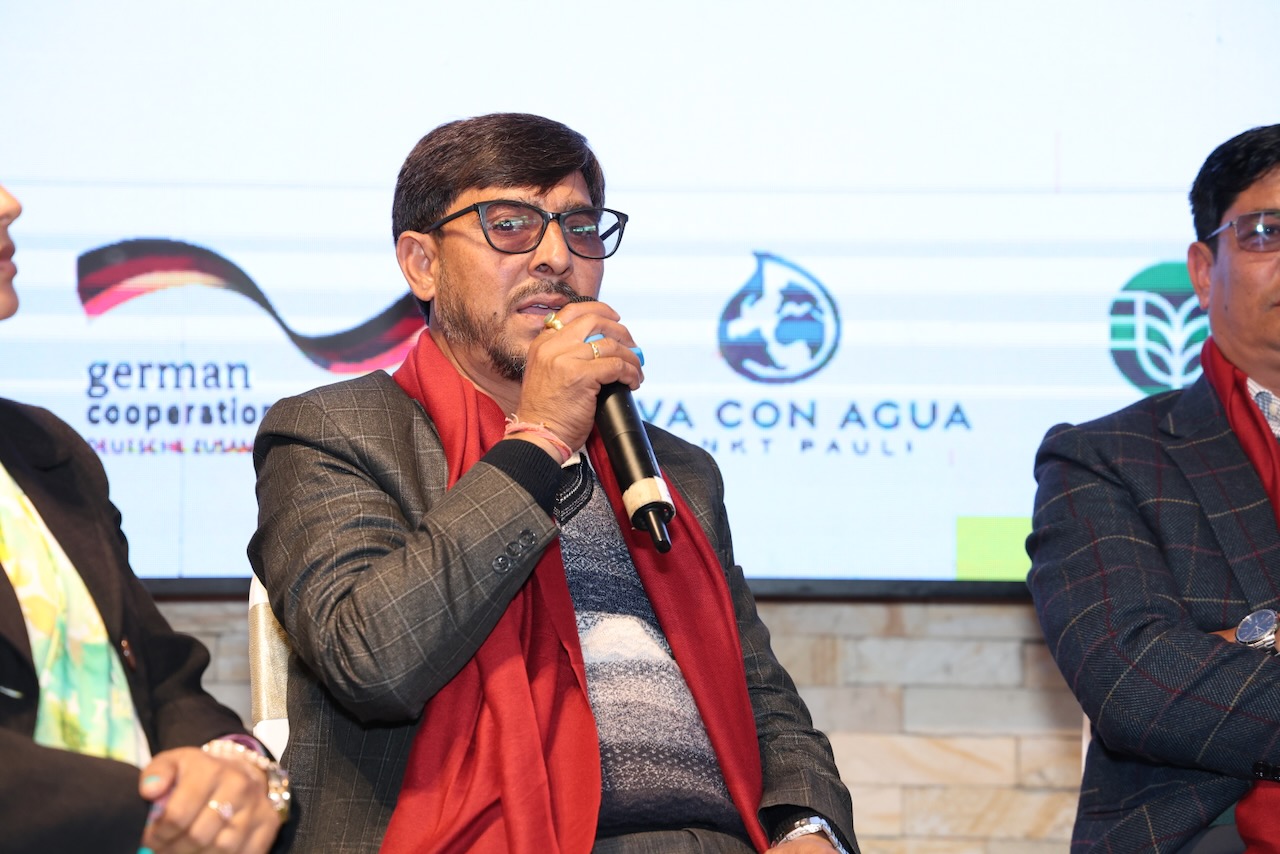
He further shared that, with the support of Welthungerhilfe (WHH) and the Mahuli Community Development Centre (MCDC) a Detailed Project Report (DPR) for the construction of a Feacal Sludge treatment plant has already been prepared. However, the process has stalled due to difficulties in acquiring land.
According to him, land could not be secured due to local opposition, and the complex approval process requiring clearance through the Community Forest, District Forest Office, Provincial Forest Office, and up to the central level has further compounded the problem. Moreover, as the proposed site falls within the jurisdiction of the Koshi Tappu Wildlife Reserve, land acquisition has become even more challenging.
Not alone, but together: Devkota
Executive Director of the Municipal Association of Nepal (MuAN), Kalanidhi Devkota, highlighted a practical solution to the problem. He suggested adopting the principle of inter-municipal cooperation when a single local government is unable to independently construct and operate a Feacal Sludge treatment facility.
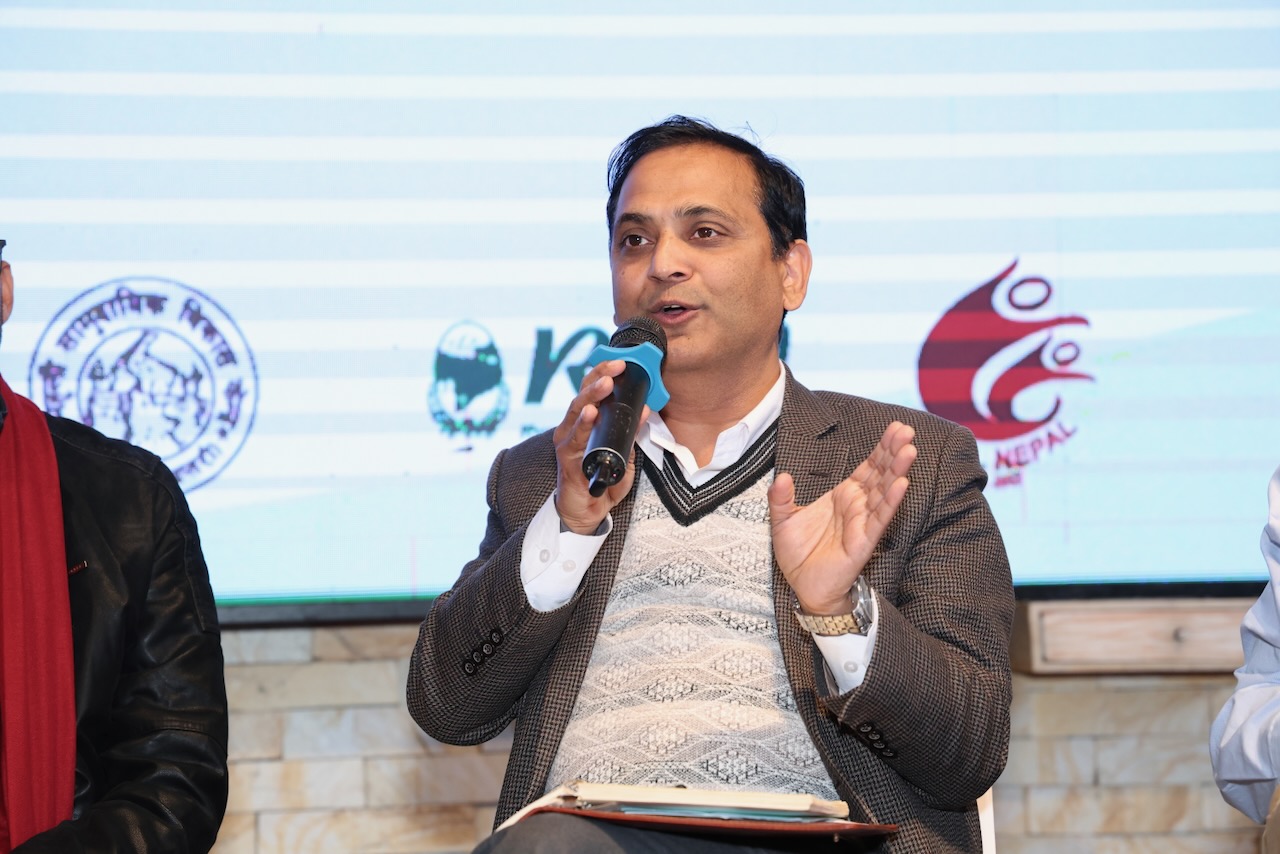
According to him, if four or five municipalities jointly invest in and establish a shared treatment plant, the costs would be reduced and service efficiency would increase. “If we shift our thinking from each municipality building its own facility to shared investment and shared operation, this sector can become far more effective,” he emphasized.
The panel discussion underscored the need for all three pillars policy, infrastructure, and collaboration to ensure safe sanitation. Participants stressed that without human excreta treatment facilities, safe sanitation would remain merely a slogan. Completing the full cycle of collection, transportation, treatment, and safe disposal or reuse of Feacal Sludge was identified as essential to achieving sustainable and safe sanitation.