128 पटक हेरिएको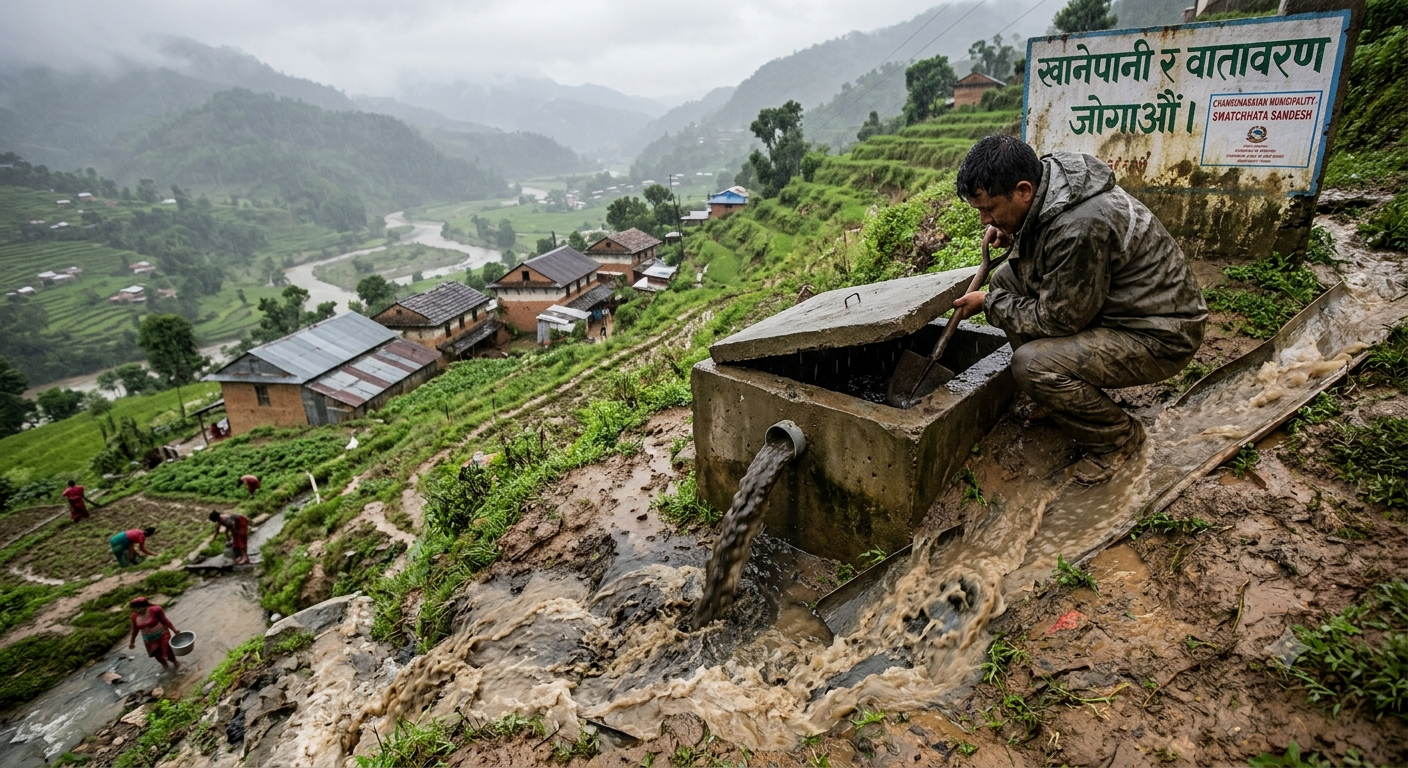
With the onset of the monsoon season, rivers, streams, and drainage channels experience increased water flow. Taking advantage of this, some people have been found opening the outlet of nearly full septic tanks and allowing the sludge to wash away with the rainwater.
This practice is particularly common in houses built on sloping terrain.
Recently, similar attempts have reportedly been observed in the upper areas of Changunarayan Municipality in Bhaktapur. This is not merely an issue affecting a single household; it is a matter of public health, environmental protection, and drinking water safety for the entire community.
Why Should Septic Tank Sludge Never Be Discharged into Rainwater?
The sludge that accumulates inside a septic tank is not ordinary soil or waste. It contains millions of harmful bacteria, viruses, parasites, worm eggs, and other disease-causing microorganisms. If this sludge is released into stormwater runoff, these pathogens can be carried downstream to settlements, agricultural fields, streams, rivers, and even drinking water sources.
As a result, the risk of waterborne diseases such as diarrhoea, cholera, typhoid, hepatitis, intestinal infections, and other illnesses increases significantly.
When human waste sludge enters rivers or streams, it degrades water quality by reducing dissolved oxygen levels, creating foul odours, and harming aquatic ecosystems. If this contaminated water is later used for irrigation, livestock, or household purposes, the pollution can spread even further.
Drinking Water Sources Are Also at Risk
Many communities in Nepal rely on springs, streams, and groundwater as their primary sources of drinking water. Septic tank sludge carried by rainwater can infiltrate the soil or travel through surface water, eventually contaminating these sources. Once a drinking water source becomes polluted, many families may suffer the consequences.
Disposing of human waste in the open environment or directly into natural water bodies is contrary to the principles of public health and environmental management. Such actions put not only one’s own family at risk but also neighbouring communities living downstream. Safe sanitation is a shared responsibility of every citizen.
What Should You Do When a Septic Tank Is Full?
• Do not wait for heavy rainfall to dispose of septic tank sludge.
• Use a safe desludging service provided by the municipality or an authorized service provider.
• Ensure that the collected sludge is transported to a designated treatment facility or approved disposal site.
• Inspect and maintain the septic tank regularly and arrange timely desludging.
• Never open the septic tank outlet to discharge sludge into stormwater drains, streams, rivers, or floodwater under any circumstances.
Everyone Has a Responsibility
If you notice anyone attempting to discharge septic tank sludge into rainwater runoff, do not ignore it as a minor issue. Raise awareness with the individual involved and, if necessary, report the incident to the local government or the relevant authorities.
A few minutes of convenience can put the health of hundreds of people at risk. Let us manage septic tank sludge safely and protect our families, our communities, and our precious drinking water sources.