71 पटक हेरिएको

Despite significant progress in toilet access, Nepal faces a critical challenge: ensuring human waste is safely managed. Bridging the gap between sanitation infrastructure and safely managed services will require stronger institutions, sustainable investment, research, innovation, and youth leadership.
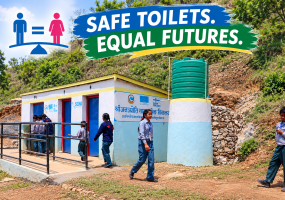
Every year on 19 November, World Toilet Day reminds us that sanitation is fundamental to human dignity, public health and environmental sustainability. The message of World Toilet Day 2026, “Safe Toilets. Equal Futures.”, provides an opportunity to reflect on how we define sanitation progress. For many years, sanitation development has largely been associated with constructing toilets, expanding household coverage, and eliminating open defecation. These achievements are essential, but they represent only the beginning of a much broader responsibility. What happens after a toilet is flushed matters just as much. Human waste must be safely contained, collected, transported, treated, and ultimately reused or disposed of without compromising public health or the environment. Without these interconnected services, access to a toilet alone cannot guarantee safe sanitation.
Nepal’s Sanitation Progress and the Unfinished Agenda
Nepal has made remarkable progress in sanitation over the past two decades, culminating in its declaration as an Open Defecation Free (ODF) nation on 30 September 2019. This achievement demonstrated the effectiveness of government commitment, community participation and coordinated development efforts. However, the country’s next sanitation challenge is considerably more complex. According to the latest national water supply and sanitation situation reporting, based on the Nepal Multiple Indicator Cluster Survey (MICS) 2024/25, approximately 92.8% of the population uses improved sanitation facilities, while only 39.9% has access to safely managed sanitation services. This significant difference illustrates the gap between providing sanitation infrastructure and ensuring that waste is managed safely. An improved toilet connected to an improperly maintained septic tank, an overflowing containment system, or an untreated drainage network can still contribute to groundwater contamination, river pollution, and public health risks. Nepal’s sanitation priorities must therefore move beyond toilet coverage towards the performance, reliability and environmental safety of the entire sanitation system.
Safe sanitation requires a functioning service chain that includes the toilet, containment, emptying, collection, transportation, treatment and safe reuse or disposal of human waste. In Nepal, where many households rely on septic tanks and other onsite sanitation systems, fecal sludge management is particularly important.
Inadequate desludging arrangements, unsafe transportation practices, insufficient treatment capacity and weak monitoring can undermine the benefits of improved sanitation facilities. Urbanization has further increased pressure on existing drainage networks and wastewater management infrastructure, with untreated domestic wastewater contributing to the deterioration of rivers and other water bodies. Recent national findings also reinforce the relationship between environmental sanitation and water safety.
MICS 2024/25 reported E. coli contamination in 46.1% of tested drinking-water source samples and 60.4% of household drinking-water samples. Although contamination may result from multiple sources, these findings underline the importance of integrating sanitation planning with drinking-water protection, wastewater treatment and environmental monitoring. The central issue is no longer simply whether sanitation facilities exist, but whether the complete system functions safely and effectively.
This transition is closely linked to Nepal’s national commitments and the United Nations Sustainable Development Goals. SDG Target 6.2 calls for adequate and equitable sanitation and hygiene for all by 2030, while Target 6.3 emphasizes improving water quality, reducing pollution, increasing wastewater treatment and promoting safe reuse. Nepal’s Constitution recognizes access to clean drinking water and sanitation as a fundamental right, while the Water Supply and Sanitation Act, 2079 (2022), and related regulatory provisions establish a legal basis for service delivery and management.
Nevertheless, achieving these commitments requires more than policy formulation. It demands effective implementation, sustainable financing, clearly defined institutional responsibilities and measurable service outcomes. With the 2030 deadline approaching, national and local governments must increasingly prioritize sanitation service quality, faecal sludge treatment, wastewater management and long-term operation and maintenance alongside infrastructure development.
Innovation, Investment and Youth Leadership
Addressing Nepal’s sanitation challenges requires practical, locally appropriate and financially sustainable solutions. Conventional sewerage networks and centralized wastewater treatment facilities remain important for densely populated urban areas, but they may not be feasible for every settlement. Decentralized wastewater treatment systems, faecal sludge treatment plants, constructed wetlands, improved onsite sanitation facilities and cluster-based treatment approaches can provide suitable alternatives depending on local geography, population density, land availability and institutional capacity.
At the same time, innovation should not be limited to introducing advanced technologies. Improving existing treatment systems, developing affordable desludging services, applying digital tools for monitoring, promoting resource recovery and strengthening service management can generate meaningful improvements.
Properly treated wastewater may offer opportunities for safe non-potable reuse, while treated faecal sludge may support resource recovery when appropriate environmental and public health safeguards are maintained. However, these solutions must be supported by technical assessments, operational feasibility and compliance monitoring rather than technology selection alone.
Sustainable financing and institutional accountability are equally critical. Sanitation infrastructure requires continuous investment throughout its operational life, including maintenance, trained personnel, energy, laboratory testing and performance monitoring. A treatment plant that is constructed but remains poorly operated or non-functional cannot provide the intended public health and environmental benefits.
Local governments therefore need stronger technical and financial capacity to plan, regulate and monitor sanitation services, while the private sector can contribute through engineering, treatment technology, laboratory services, digital solutions and professional operation and maintenance. Partnerships among government institutions, service providers, academic organizations and communities can help bridge existing gaps in technical expertise and service delivery. Future sanitation investments should be evaluated not only by their construction costs but also by their long-term reliability, environmental performance and ability to serve communities sustainably.
Within this transformation, youth leadership and applied research deserve greater recognition. Nepal has a growing generation of engineers, environmental professionals, researchers, entrepreneurs and community leaders with the potential to develop innovative sanitation solutions. Yet youth engagement is often concentrated on awareness campaigns rather than meaningful participation in technical planning, research, policy dialogue and service delivery.
Universities, research institutions, local governments and private enterprises should create opportunities for young professionals to test appropriate treatment technologies, assess faecal sludge and wastewater management practices, develop digital monitoring systems and introduce affordable service models. Research must also extend beyond academic publications to practical applications that respond to real community needs.
By connecting scientific knowledge, entrepreneurship and local experience, young professionals can help make sanitation services more efficient, accessible and sustainable. Their contribution will be particularly valuable in promoting evidence-based decision-making and adapting innovations to Nepal’s diverse geographical and socioeconomic conditions.
Towards Safe, Inclusive and Climate-Resilient Sanitation
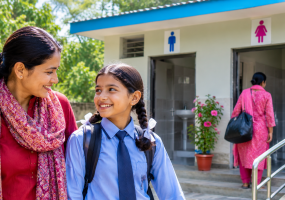
Sanitation is not only an infrastructure or environmental management issue; it is also closely connected to equality, social inclusion and climate resilience. Inadequate sanitation disproportionately affects women, girls, persons with disabilities and marginalized communities, particularly in schools, healthcare facilities, workplaces and public spaces where privacy, accessibility and safety are essential. Meanwhile, increasing climate-related hazards such as floods, landslides and extreme rainfall can damage sanitation facilities, overwhelm drainage systems and disrupt wastewater treatment operations, increasing the risk of environmental contamination.
These challenges require sanitation planning that integrates gender-responsive infrastructure, universal accessibility, climate-risk assessments and emergency preparedness. Investments in resilient containment systems, reliable treatment facilities and improved monitoring can help protect both communities and ecosystems, particularly in vulnerable settlements.
Nepal’s ODF achievement demonstrated that collective commitment can bring significant national progress. The next milestone must be the transition from toilet access to safely managed sanitation for all. This will require coordinated action among all three levels of government, the private sector, research institutions, development partners and communities.
Local governments must strengthen planning, regulation and service monitoring; national institutions must support technical standards and sustainable financing; and the private sector and academic community must contribute practical innovation, professional services and evidence-based solutions.
Most importantly, sanitation performance should be assessed through meaningful outcomes: whether human waste is safely managed, wastewater is adequately treated, water resources are protected and services remain reliable and inclusive. As Nepal moves towards the 2030 Sustainable Development Goals, measuring success solely through the number of toilets constructed will no longer be sufficient.
World Toilet Day 2026 is an opportunity to recognize Nepal’s achievements while acknowledging the responsibilities that remain. The country’s sanitation future depends on shifting from infrastructure-focused development to integrated, sustainable and accountable sanitation services.
Strengthening the entire sanitation chain, investing in effective wastewater and faecal sludge management, encouraging research and youth-led innovation, and building climate-resilient systems will be essential to protecting public health and the environment. A toilet may be private, but sanitation is everyone’s business. The real measure of progress will not be how many toilets we build, but how safely we manage what happens beyond them.