375 पटक हेरिएको
Although Nepal has recognized water and sanitation as fundamental human rights, sanitation has still not received adequate priority in practice. Compared to sectors such as roads, electricity, health, and education, sanitation has not been advanced with the same seriousness as a public service.
Yet sanitation is directly linked to public health, environmental protection, human dignity, and overall development. Therefore, what Nepal now needs is a government that treats sanitation not merely as a matter of charity, projects, or campaigns, but institutionalizes it as a regular, sustainable, and rights-based public service.
Why Sanitation is a Public Service
Sanitation is not just an individual behavior; it is a collective responsibility. The problem cannot be solved simply because one household builds a toilet or manages its waste properly.
If neighboring communities still practice open defecation, unsafe waste management, or use contaminated water, the consequences affect everyone. Therefore, sanitation should not be seen as an individual choice but as a basic service that must be ensured by the state.
The World Health Organization (WHO) also considers safe water, sanitation, and hygiene as fundamental pillars of health security. Diseases such as cholera, diarrhea, typhoid, and hepatitis A often spread due to inadequate sanitation. In a developing country like Nepal, investing in sanitation is one of the most effective ways to reduce health costs and increase productivity.
Nepal has already enacted the Water Supply and Sanitation Act, 2079, which includes provisions for quality standards, regulation, and monitoring. However, many provisions of the law are yet to be implemented in practice. Issues such as appointing inspectors, registering and regulating service providers, and enforcing quality standards remain largely confined to paper.
Frequent changes in government priorities have also prevented sanitation from receiving long-term policy continuity. At times, “Total Sanitation Campaigns” are launched, while at other times the momentum slows down. Such inconsistency affects the sustainability of services.
Following Nepal’s federal restructuring, the primary responsibility for sanitation service delivery has shifted to local governments. However, many municipalities still face shortages of technical staff, budget, and clear operational guidelines. Institutional capacity to manage solid waste, fecal sludge management (FSM), wastewater treatment, and behavior change programs is not equally developed across all local governments.
If the government truly wants to establish sanitation as a public service, it must empower local governments with adequate resources, skills, and authority. Planned budget allocation, technical training, monitoring systems, and partnerships with the private sector are essential.
The Question of Sustainability
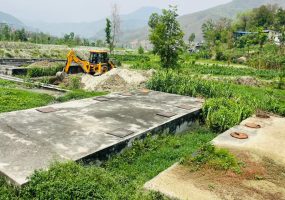
In the past, toilets were built in many areas, but due to water shortages, lack of maintenance, or discontinuity in use, many structures eventually became non-functional. Sanitation should not be viewed as a one-time construction achievement, but as a continuous service.
To ensure sustainability, measures such as regular service fee systems, institutional arrangements for waste collection and treatment, mandatory sanitation standards in schools and health facilities, and continuous social behavior change campaigns are necessary.
Sanitation is not only about disease prevention; it is also about human dignity. Without safe and accessible toilets for women, children, the elderly, and persons with disabilities, true equality cannot be achieved. In many schools, the lack of separate and safe toilets still forces adolescent girls to miss classes or even drop out.
Therefore, sanitation must also be viewed through the lenses of gender equality, social justice, and inclusive development.
Investing in sanitation is not a cost but a long-term saving. Healthy citizens spend less on healthcare, are more productive, and contribute to a stronger national economy. A clean environment is also essential for tourism, urban development, and attracting investment.
Nepal has committed to ensuring safe water and sanitation for all under the United Nations Sustainable Development Goals (SDGs). However, achieving this goal requires a combination of political will, clear policies, and effective implementation capacity.
Therefore, the time has come to move sanitation from a campaign to a system. The new government formed after elections should prioritize sanitation as a constitutional right in practice allocating clear budget priorities, strengthening local governments, ensuring effective enforcement of laws, and guaranteeing accountable services for citizens.
Only when sanitation is institutionalized as a basic public service like schools, hospitals, roads, and drinking water can a healthy, dignified, and prosperous society truly be achieved.