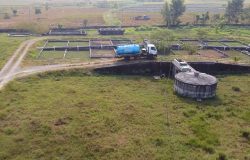
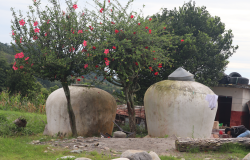
• Four Day Training on Faecal Sludge Treatment Plant Design Underway in Nagarkot

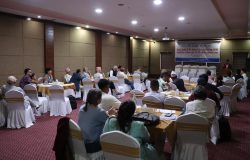
    Nagarkot : A four day training on Faecal Sludge Treatment Plant (FSTP) design is currently underway in Nagarkot. The training has been organized with the objective of enhancing the technical knowledge required for the effective design of faecal sludge treatment plants, informed Rajendra Shrestha, Executive Director ...

  • Nepal’s Progress in WASH a Model for Others, Says UN-Habitat Official

    Kathmandu: Hezekiah Otieno Pireh, Water and Sanitation Team Leader at UN-Habitat, expressed that the progress Nepal has made in the WASH sector through coordination at different levels has set a good example for other countries. Addressing the 22nd meeting of the CWIS Alliance Nepal (CWISAN) held at the UN Confe...

  • Zero Waste Exhibition 2026 concludes, promotes circular economy solutions

    Kathmandu : The "Zero Waste Exhibition 2026," aimed at promoting sustainable practices and circular economy solutions, concluded successfully in Kathmandu after a two-day run. Organised at the Nepal Academy of Fine Arts on March 30–31, the event marked the International Day of Zero Waste and brought together sta...

  • Koshi Province Municipalities Embrace City-Wide Inclusive Sanitation Approach

    Nagarkot : In a significant step toward ensuring sustainable, equitable, and resilient sanitation services, an introductory training on the City-Wide Inclusive Sanitation (CWIS) approach concluded successfully at the National Water Supply and Sanitation Research, Innovation and Capacity Development Center (NWSSRICDC)...

  • Director General Shrestha Stresses Risk Reduction in Sanitation Work

    Kathmandu: Director General of the Department of Water Supply and Sewerage Management, Kamal Raj Shrestha, has emphasized the urgent need to reduce the serious health and safety risks faced by sanitation workers engaged in human waste management, particularly in urban areas where rapid population growth, limited land...

  • Men Need to Cry, Speak, and Heal

    For generations, South Asian society has conditioned men to believe that strength means silence. From early childhood, boys are told, “Be a man,” “Don’t cry like a girl,” “Crying is for girls.” These sentences are spoken casually at home which are reinforced by culture, and echoed across Nepal, India, Pakistan, Ban...