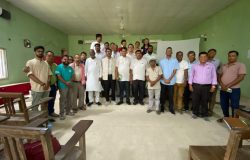
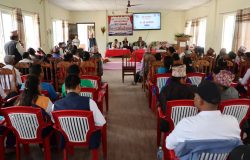
Lalitpur : With technical and financial support from WaterAid Nepal and The Coca-Cola Foundation, the Centre for Integrated Urban Development (CIUD) has launched a new WASH project in Godawari Municipality to improve access to safe and reliable drinking water. The project, titled “Advancing Resilient WASH Access f...
English
-
-
Working in Risk: Sanitation Workers Speak Out in Kathmandu
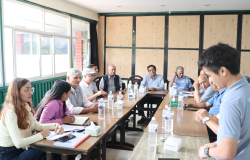
Kathmandu: An interaction programme was held with sanitation workers on issues related to their rights, dignity, and safety. The interaction was organized among the Ministry of Water Supply, the Department of Water Supply and Sewerage Management, Lalitpur Metropolitan City, WaterAid Nepal, Environment and Public Hea...
-
Why is micro level data the foundation of effective sanitation systems?
Sanitation does not only mean whether a household has a toilet or not. Real sanitation means that the entire sanitation value chain from the safe containment, transportation, treatment, and final disposal of human excreta after the toilet is used is properly and safely managed. In most cities of Nepal, data are avai...
-
From Toilets to Treatment: Lalitpur Begins In Depth Citywide Sanitation Survey
Lalitpur: In Lalitpur Metropolitan City, very detailed (micro-level) sanitation-related data will be collected through a Citywide Inclusive Sanitation (CWIS) situation assessment survey. While previous studies were mostly limited to asking whether a household has a toilet or not and, if yes, what type of toilet it i...
-
Why Do People Die While Cleaning Septic Tanks? How Can It Be Prevented?
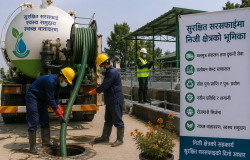
Kathmandu: In recent years, incidents of sanitation workers losing their lives due to suffocation while cleaning septic tanks have been repeatedly reported from different parts of Nepal. Toxic gases accumulated inside septic tanks such as hydrogen sulfide, methane, and ammonia are extremely dangerous to human health....
-
Why Onsite Sanitation Is Essential for Safely Managed Sanitation
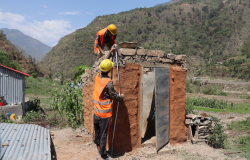
Sanitation is directly linked to human health, environmental protection, and a dignified life. Without access to safe toilets, neither a healthy community can be built nor can water sources be protected. In this context, for a geographically diverse country like Nepal, onsite sanitation has increasingly been establi...
-
DEWATS: A Sustainable Alternative for Wastewater Treatment
Kathmandu: Managing wastewater safely in cities and settlements has become one of today’s major challenges. At a time when centralized sewerage systems are becoming increasingly expensive, complex, and costly to operate in the long run, the Decentralized Wastewater Treatment System (DEWATS) is being adopted worldwide a...
-
On-Site Sanitation Systems Better Option for Nepal: Dr. Chapagain
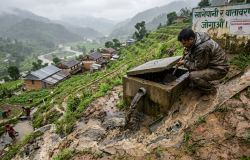
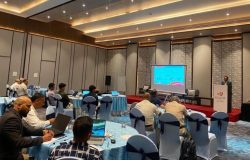
Kathmandu: Dr. D.P. Chapagain, Executive Director of the Kathmandu Valley Water Supply Management Board, has stated that centralized sewerage systems are extremely expensive and unsustainable in the long term for a country like Nepal. At the knowledge sharing and learning exchange program of the “Dukuchhap Sustainab...
-
Agreement Signed Between Ghorahi and Sewerage Management Office for Operation of FSTP
Ghorahi: An agreement has been signed between the Water Supply and Sewerage Management Office (WSSMO), Nepalgunj, and Ghorahi Sub-Metropolitan City to ensure the regular operation and maintenance of the Fecal Sludge Management (FSM) project being implemented in Ghorahi. The agreement was facilitated during a monitor...
-
Safe Sanitation Beyond Toilets: Local Governments Struggle with Feacal Sludge Management
Kathmandu: Sanitation is not an issue limited only to toilet construction. The goal of safe sanitation cannot be achieved unless the entire sanitation chain collection, transportation, treatment, and safe disposal or reuse of human excreta is completed. However, in reality, many local governments have not been able ...
- « Previous Page
- 1
- 2
- 3
- 4
- 5
- …
- 55
- Next Page »